Off to the Algarve

After a good night’s sleep in Évora we set off for Lagos (pronounced LAHgosh), a town of 31,000 people and our first destination in the Algarve. Lagos is very nearly on the southwest tip of Portugal and about a 2 1/2 hour drive from Évora. The drive took us south through the middle of Portugal and we were treated to a beautiful landscape of rolling vineyards and cork forests for most of the trip. Once again the roads were fantastic. As we got closer to the southern coast we continued to see vineyards, but the cork forests started to give way to citrus groves.

Ever since our Costa Rican adventure, Jill and I use Waze as a navigation aid whenever we are in uncharted territory. We got the giggles as we were approaching Lagos, because there was what seemed like an interminable series of roundabouts and while we were still exiting one roundabout the Waze lady would chime in again with directions for the next roundabout: “At the roundabout, take the second exit…”.

On the topic of navigation, one of the things that I have come to take for granted is our teamwork when driving in unfamiliar situations. My job is to drive, but Jill is the one thinking three moves ahead and providing clear guidance on the navigation front. That comes in handy when there’s a roundabout with 5 exits. The Waze lady may say “Take the third exit”, but Jill provides clarity in the form of a “You’re going straight through” or “You’re exiting the roundabout on the left…”. What’s nice about that dynamic is we are a team and even when it doesn’t go well we laugh about it. That came in very handy on this trip because every hotel we stayed at was in an ancient town whose master plan did not include autos or anyplace to park.

As we entered Lagos proper in a misting rain, the Waze lady directed us to the Lagos Avenida Hotel (highly recommended!) and as we caught sight of the hotel it became clear that there was not anyplace obvious to park. Fortunately, the farmers’ market in Lagos is right next to the hotel and there was a little place for me to pull off the road and wait while Jill popped into the lobby to get instructions on where to park (a dance we are getting fairly good at). Jill went inside and was back out in 30 seconds and directed me to a spot with a big X on it in front of the hotel – which apparently is the Portuguese symbol for loading zone. We offloaded our bags and the nice lady in reception gave us directions to the car park a few blocks away at the marina. Along with the directions, she went out of her way to tell us that our vehicle would be completely safe in the marina car park and that there was nothing to worry about. She wasn’t being patronizing – she was really proud to report that Portugal is extremely safe. So, we hopped back in the car and headed off to the car park, which I would not have found without Jill’s assistance. Pro tip: Turns out two sets of ears to hear instructions are extremely useful when you are in unfamiliar surroundings.
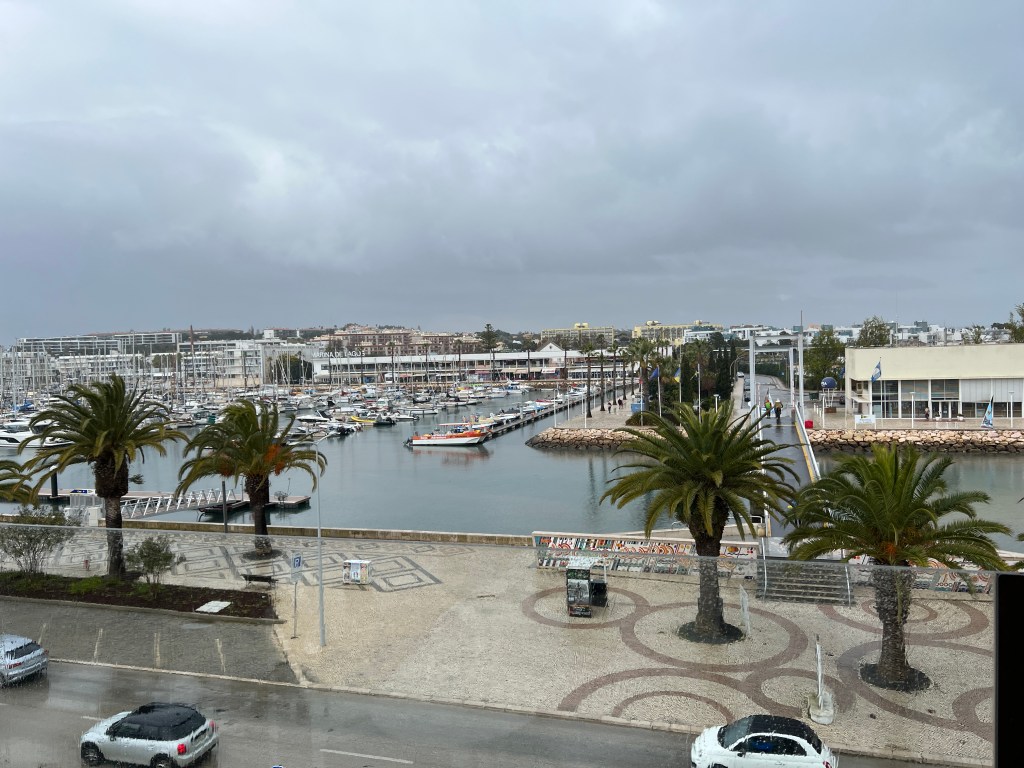
The Lagos Avenida Hotel is in the perfect location for walking with a nice view of the marina

After parking the car we popped back to the hotel, got our room keys, tucked our bags in our room, and set off to find lunch in the rain. As Jill can attest, I can eat pizza for every meal and never get tired of it. So, it’s usually the case that our first meal in a new location is likely to be pizza. Lagos was no different. We found a fantastic pizzeria called Luzzo right off of the main square and waited out the rain with a wonderful truffle pizza!
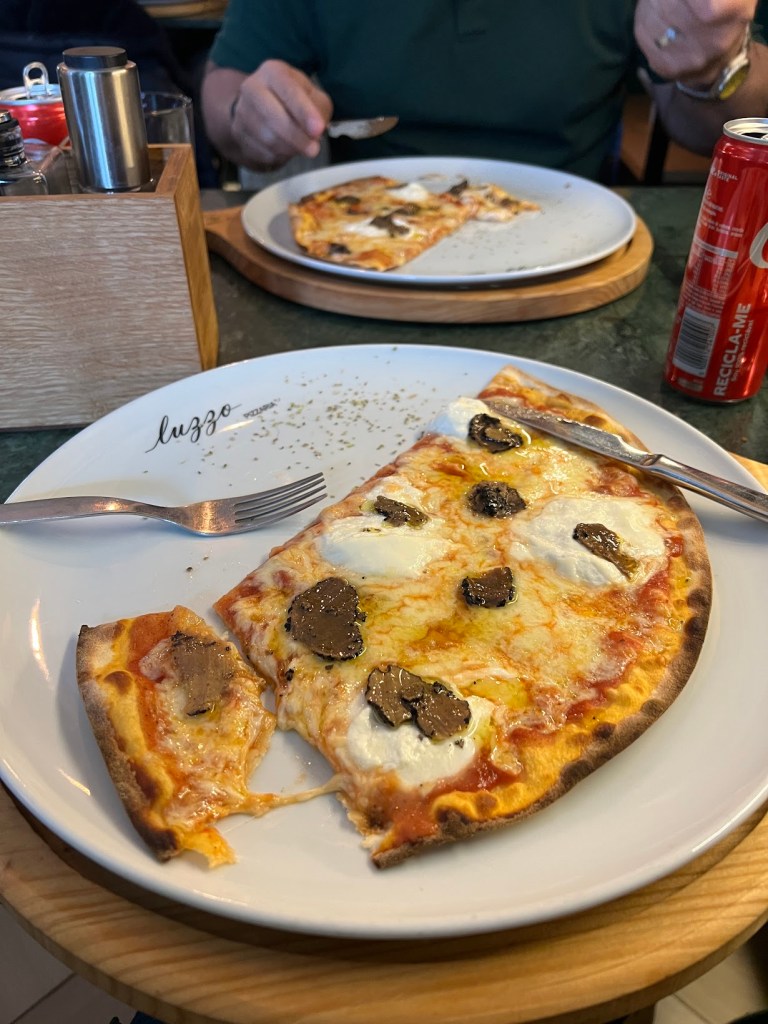
Portugal’s pizza game is on point

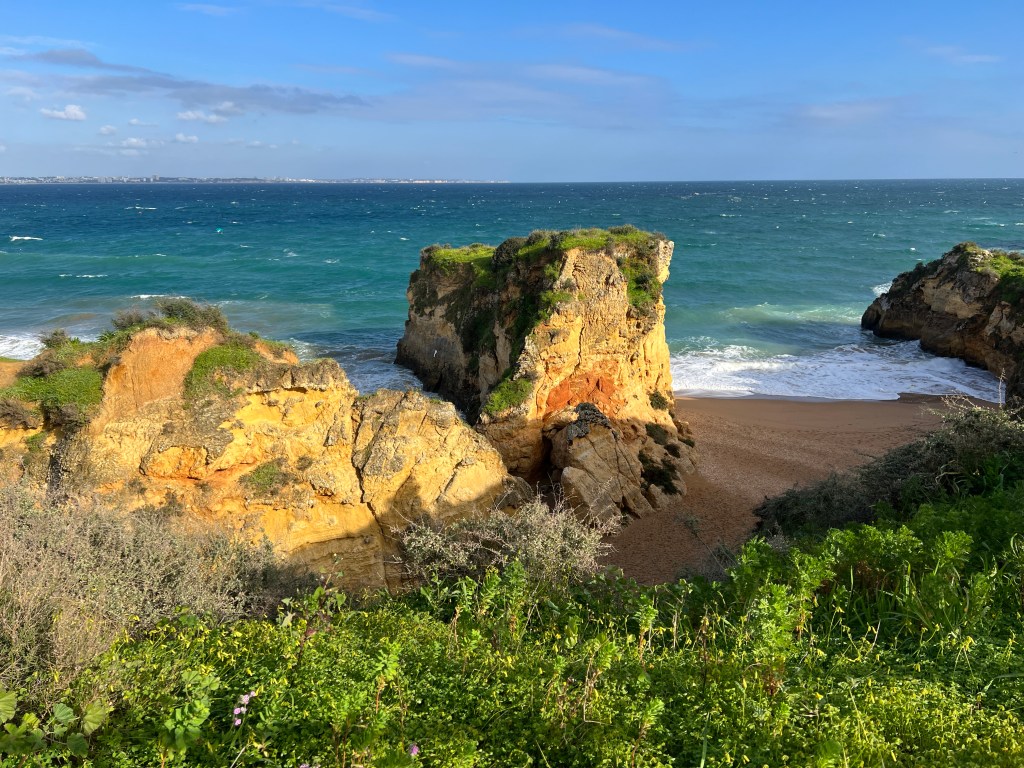
By the time lunch was over the rain had mostly cleared and we set off for a walk along the coastline. The scenery on the southern coast of Portugal is pretty amazing.
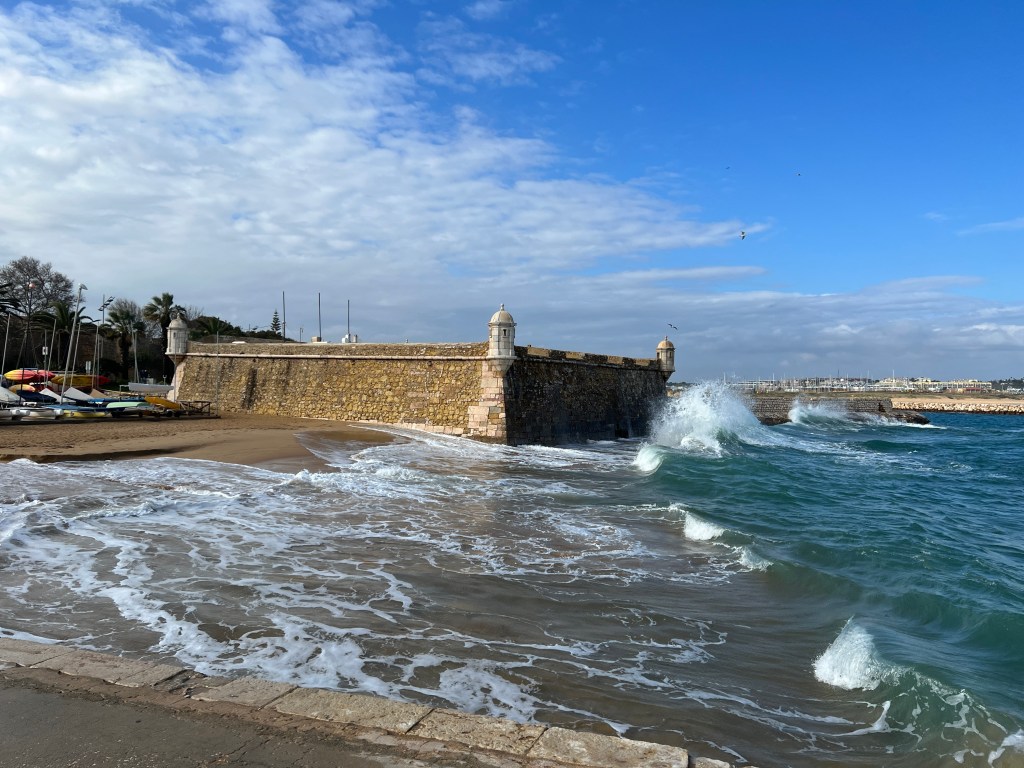
An old fort, complete with drawbridge, protects the entrance to the Lagos harbor
It’s all pretty breathtaking

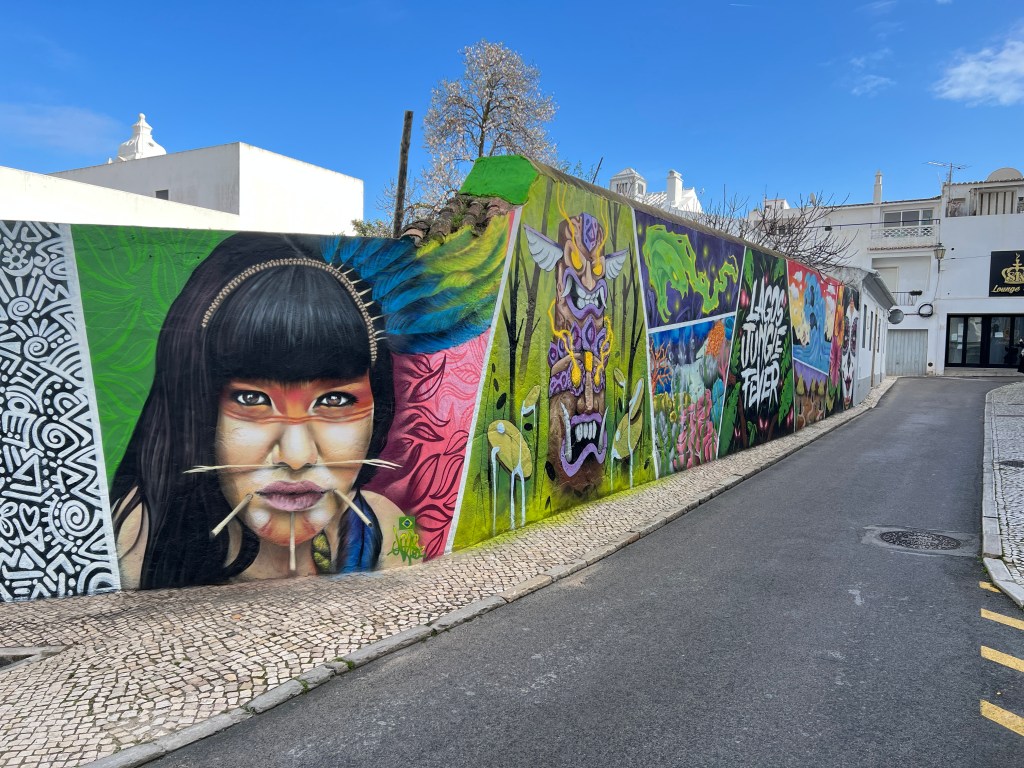
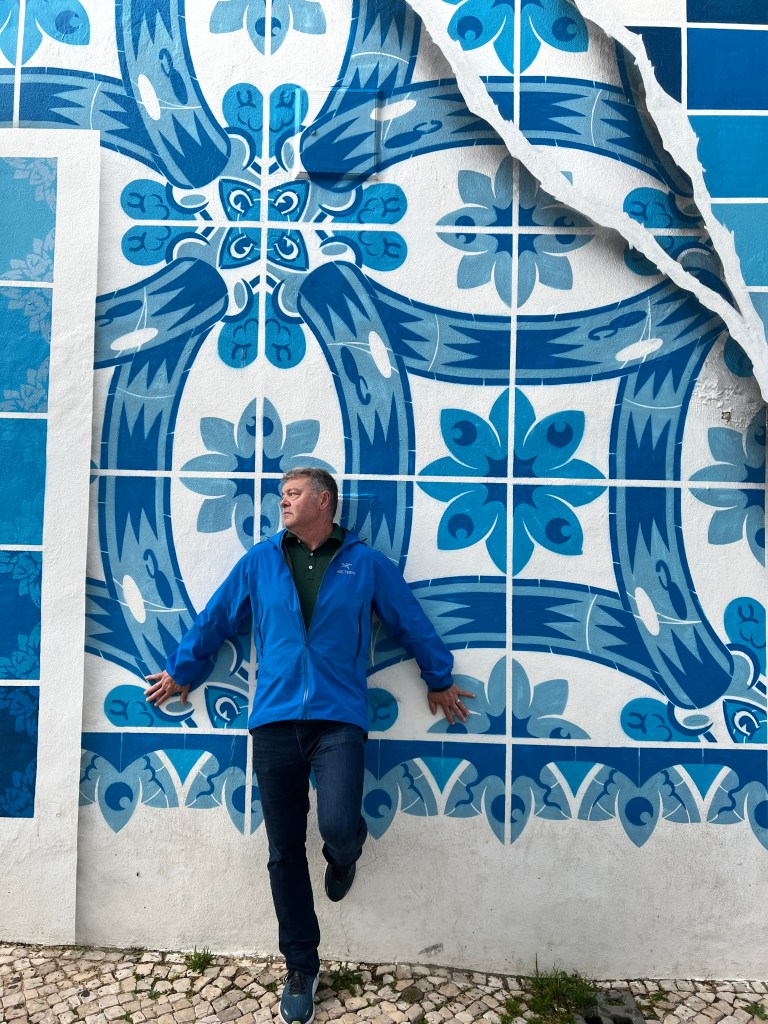
We walked along the coast for a couple of miles and doubled back to explore the old town of Lagos. There’s an interesting juxtaposition of old and new within the town, with street art being celebrated (generally to the exclusion of graffiti).
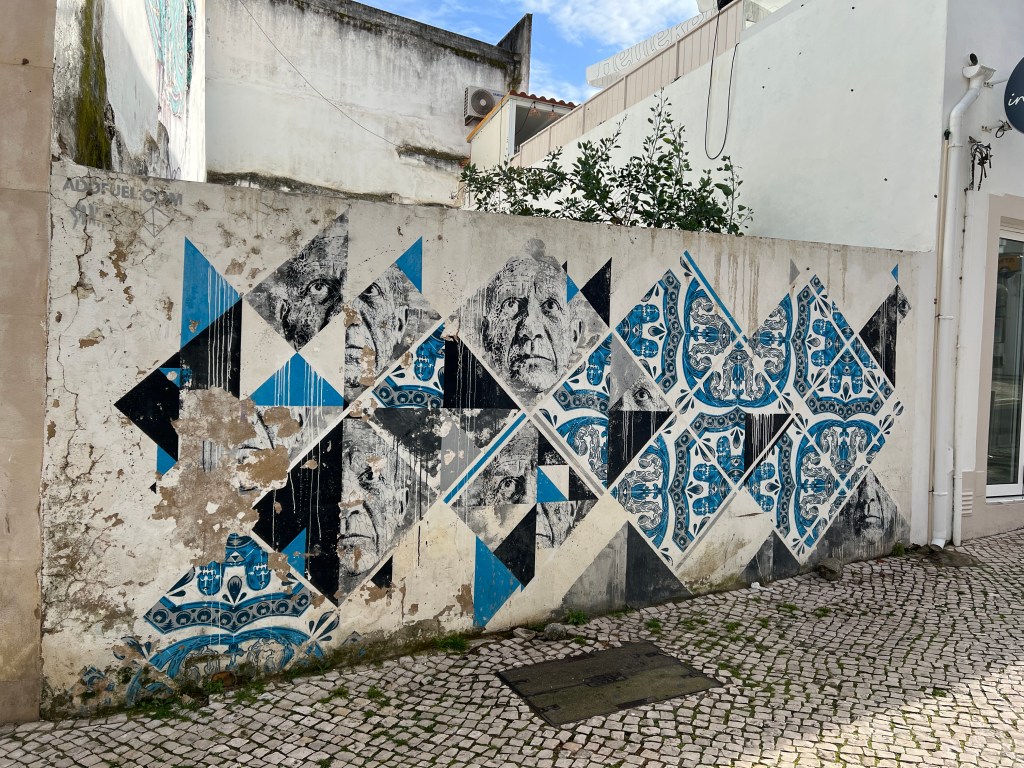
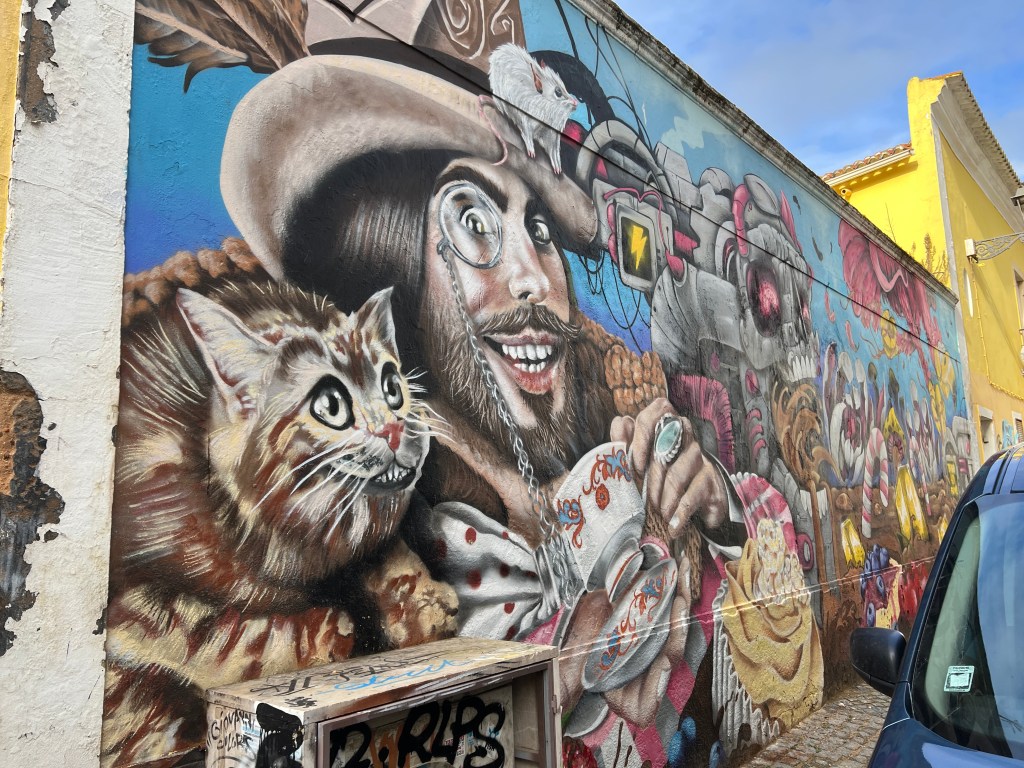
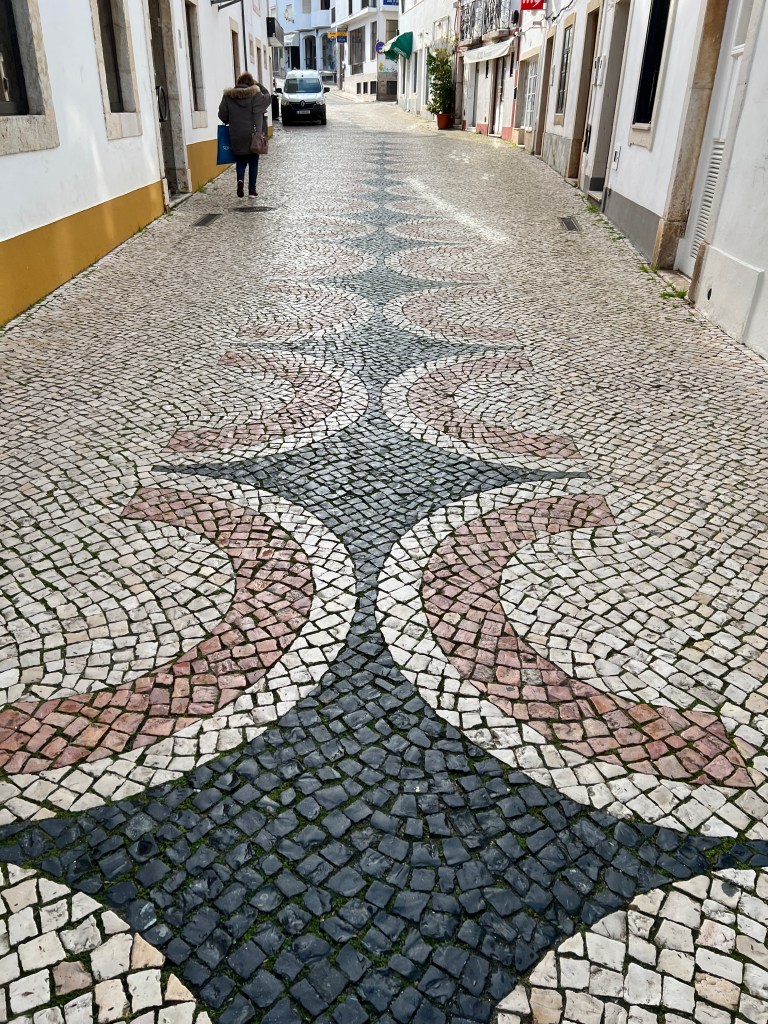
The cobblestone patterns in Lagos were an unexpected source of joy

As I mentioned previously, there’s a heavy tourist bent to the Algarve with the tourist traditionally being English, Irish, German, or Canadian. For example, most of the restaurants announce that they serve a Full English Breakfast and there are a number of proper English and Irish pubs. That’s another plus for me, as I really like a proper meat pie. We quickly found our favorite English Pub in Lagos called the Three Monkeys. And we also found a restaurant called Pie, where we had a dinner of fantastic steak and onion pies.
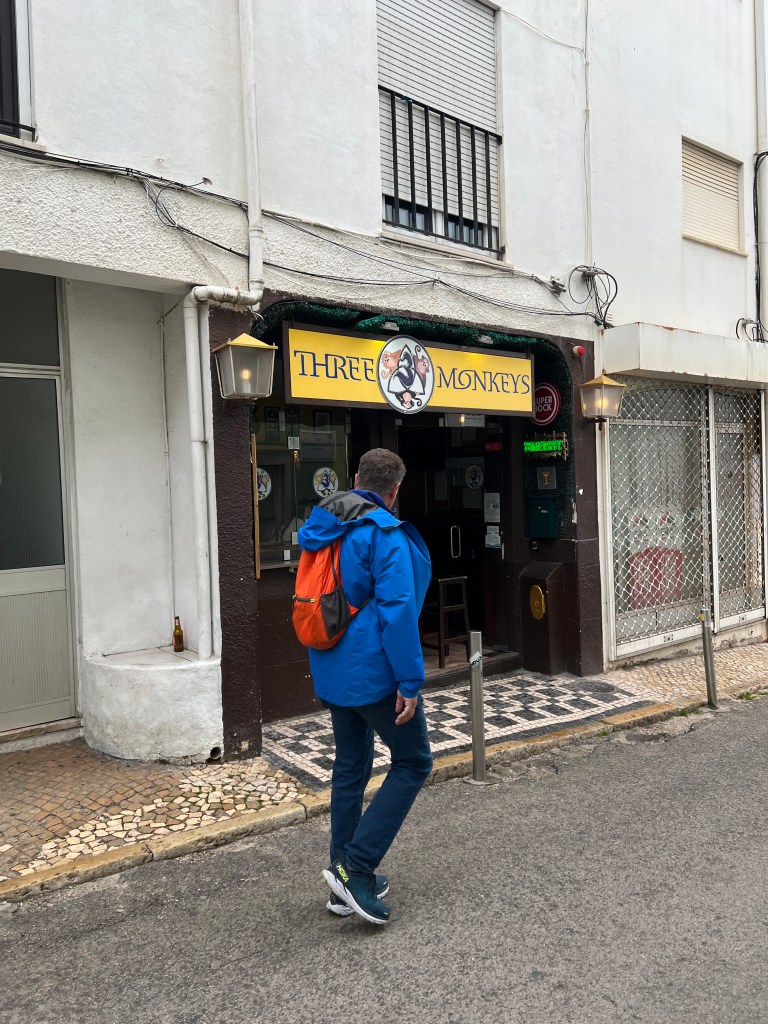
We did our best to become “regulars” at the Three Monkeys

We’d had a full first day in Lagos and fell into bed and slept like the dead. The next morning we had a leisurely breakfast at the hotel. One of my favorite things about Europe is that the breakfast that’s included with your hotel stay is almost always delicious. We lingered over an extra cappuccino after breakfast at the Avenida and, for the first time, had a serious conversation about what it would be like to move to Portugal. We both had an existential freak out about 5 minutes into the conversation and we agreed to table it and just be tourists for a while.

As we’d discovered when we first arrived, the Lagos Avenida Hotel is right next to the Lagos farmer’s market, which is open daily and appears to be well attended by the locals. After breakfast we wandered next door to the market to see the wares. For whatever reason wandering the stalls of the market and seeing the fantastic produce on offer was very reassuring and took the edge off of the freak out from our breakfast discussion about moving to Portugal. Similar to our experience in Costa Rica, we subsequently learned that every town in Portugal is ready to declare their farmer’s market to be the BEST in the country.
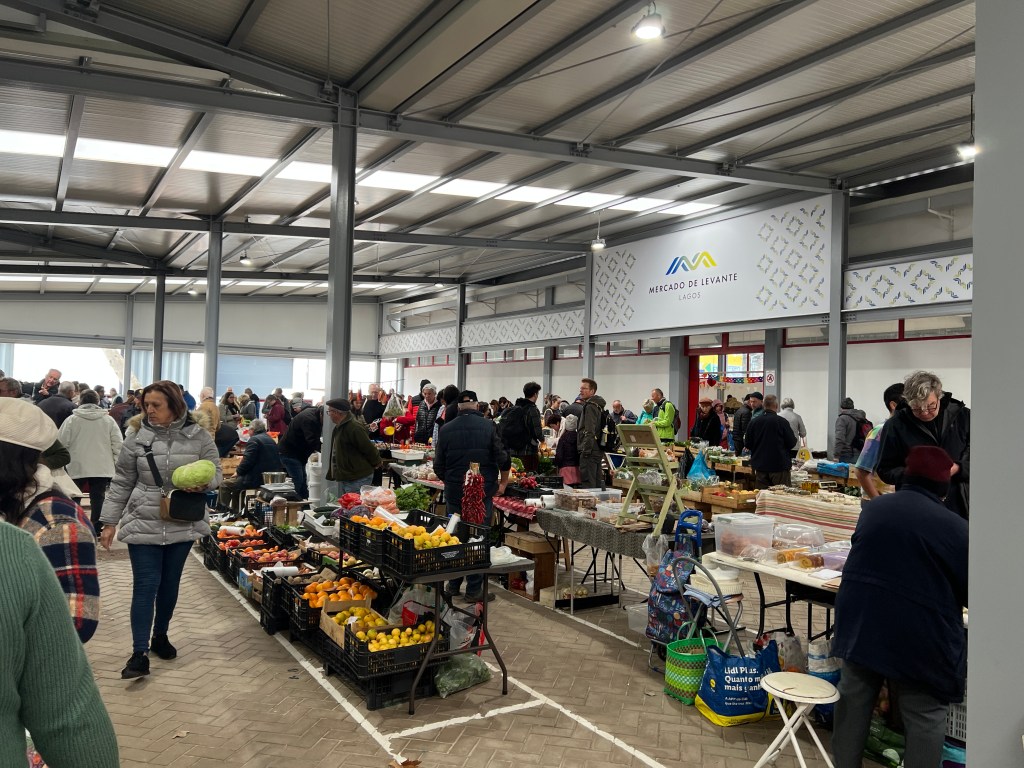
The Lagos farmers’ market

Jill’s original itinerary with Stephanie for that day called for us to go visit the fort in Sagres (Fortaleza de Sagres), which is a massive edifice on the westernmost tip of continental Europe. We stuck with that plan and hopped in the car and made the 30 minute trek to Sagres.
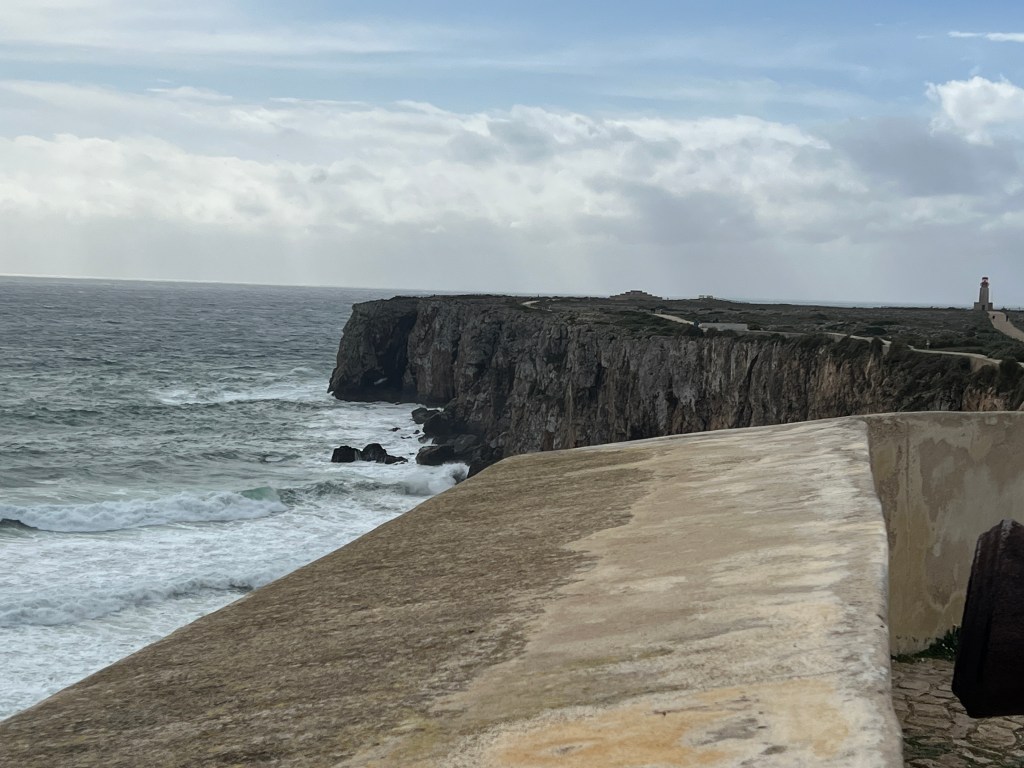
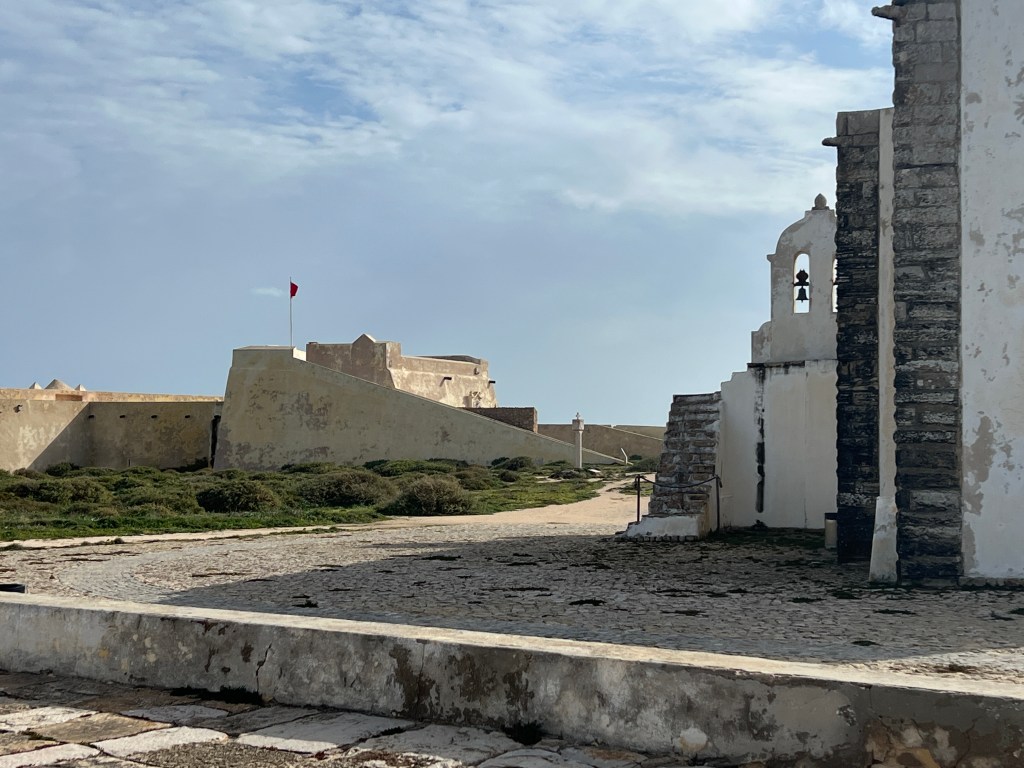
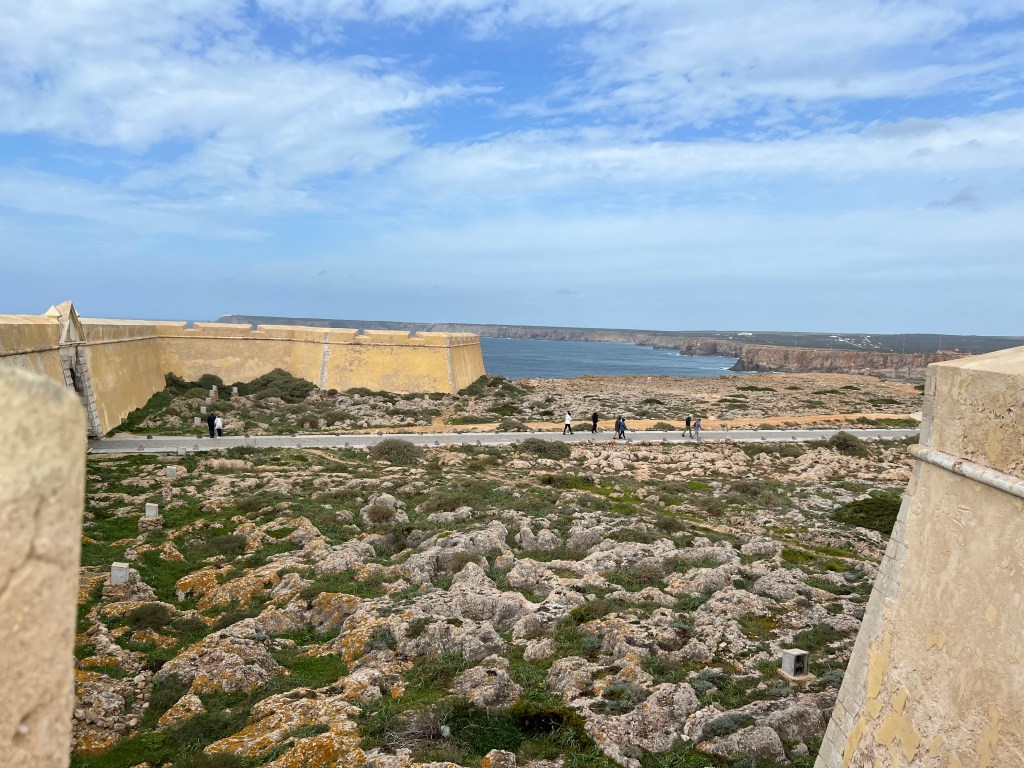
View from the parapet of the fort
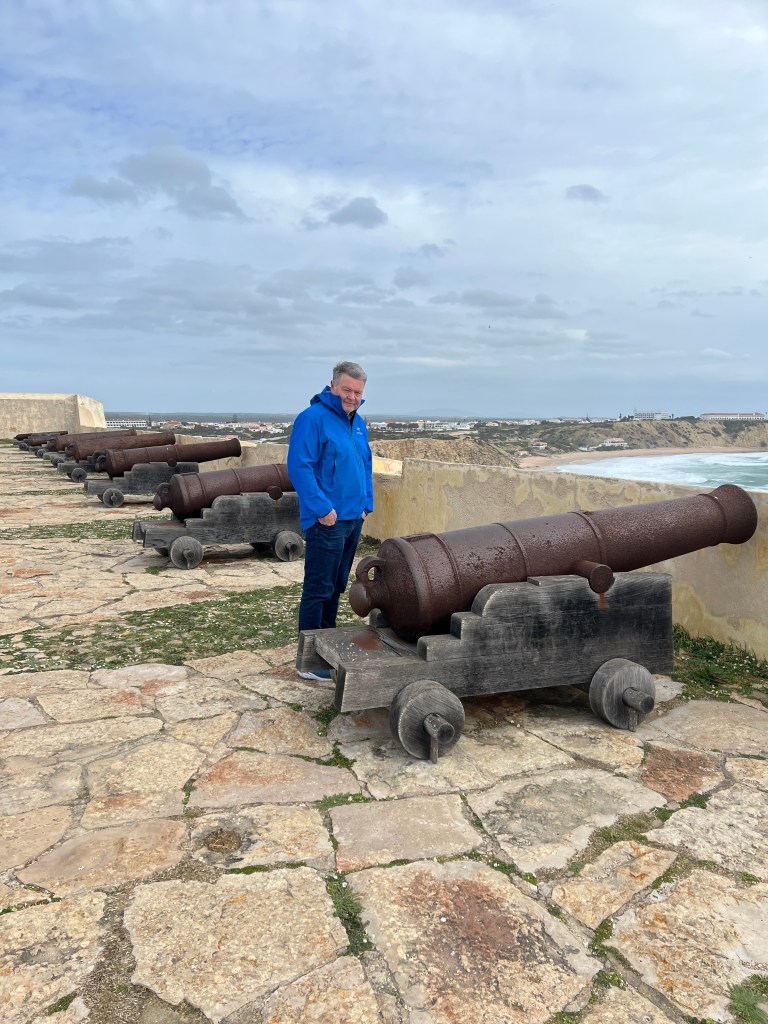
The fort is extremely large with stone ramps all around to trundle artillery up to the walls
Proof that they rolled cannons up the stone ramps!
North-facing view from the inside of the fort. Note that the coastline is a pretty fair barrier in itself.

After we wrapped up at the fort we piled back into the car and started heading back toward Lagos. We’ve found that the smallest things can be meaningful learning opportunities when you feel like a fish out of water in another country. We decided to pull into a Repsol station in the sleepy little town of Vila do Bispo and top up our rental car with diesel. We pulled in and the sign on the pump said that we needed to pay in advance. There was not a credit card terminal on the pump so I handed Jill 50 Euro and she went off to the cashier. What followed was a comical pantomime where I started pumping and then the pump stopped and then Jill stepped out of the cashiers office and yelled at me to stop touching things! Then she came back out and gave me the the thumbs up to proceed. After I’d finished pumping Jill came walking back to the car with our change and regaled me with the exchange that she’d had with the gas station operator (who was lovely). After exchanging the required pleasantries, the man told Jill that the notice about paying advance was largely discretionary and taught her the proper protocol for gassing up in Portugal.

I’ll conclude this post by sharing that protocol:

When you pull into a gas station in Portugal, select a pump and exit your vehicle. If there is no credit card terminal on the pump, you make eye contact with the person in the cashiers office. If you don’t look “dodgy” he will give you a thumbs up and you can set about filling your tank whereupon you pay inside after you are through. If he gestures for you to come inside, then you have failed the “doesn’t look dodgy” test and you have to pay in advance.
Backstory: Why move to Portugal?

In February of 2023, Jill was supposed to take her sister, Stephanie, to Portugal. Stephanie had never been to Europe and Jill had never been to Portugal – so Jill meticulously researched and planned an 8 day trip focused on the southern coast of Portugal, an area known as the Algarve. Unfortunately several weeks before the trip was scheduled to begin Stephanie took a tumble and injured her hand. The trip was on life support while Stephanie got her hand evaluated. Ultimately it became clear that Stephanie required surgery and she had to break the sad news to Jill that she couldn’t go. Before pulling the plug on the trip altogether, Jill asked me if I had any interest in being her first-alternate traveling companion to Portugal. With less than a week’s notice and in the middle of a big work project, I floated the idea at the office and the wonderful team at Boundless encouraged me to jump on the opportunity. And, much to our surprise, the nice people at United were willing to change Stephanie’s ticket into my name and adjust the embarkation point from Dallas to Austin, which resulted in us getting $100 back on the ticket. (Author’s note: In retrospect, this was the first of series of Portugal-related lucky bounces that make us both feel like we are destined to live in Portugal.)

On February 7th we flew to from Austin to Lisbon on United, by way of Newark. Fun fact: Portugal sticks out sneakily far to the west of continental Europe and is on roughly the same latitude as Newark, making the duration of the Newark to Portugal flight a shade under six hours. An unexpected downside to a brief trans-Atlantic flight is that by the time dinner is served and cleared there are only about 3 1/2 hours left for sleeping before you have to start getting sorted for landing.

Upon landing, we breezed groggily through passport control, collected our bags, and headed for the SIXT rental car desk. We’ve all had horrible rental car experiences, this was not one of those. We can’t say enough about the nice people at SIXT- more about that later.

Our first stop was the town of Évora, conquered by the Romans in 57 BC, the Visigoths in 584 AD, and the Moors in 715 AD and reconquered by Portugal in 1165 AD. Evora is just under two hours from Lisbon, which put it right at our maximum radius before jet lag started kicking in full force. The drive from Lisbon to Évora, was our first exposure to how good Portugal’s infrastructure is. Around 2008, when a lot of southern European countries got into debt trouble I didn’t give much thought to what they spent the money on. Our recent firsthand observation is that Portugal, at least, spent much of the money they borrowed on fantastic modern highways and fiber internet (I believe they also modernized their rail infrastructure but we haven’t braved the train system yet). That is made apparent by the fact that you can transit Portugal at 100+ Km/hour on an autobahn-class highway that puts our crappy roads in Texas to shame and then when you reach your destination you are exactly one well-engineered roundabout away from millennia old towns that still have standing Roman walls and temples and 8 foot wide cobbled streets. Fortunately, Jill was already all over that last bit and had already identified a car park outside the walls and tiny, twisty streets of Évora, where, after dropping our bags at our hotel, we stashed our car for the night.

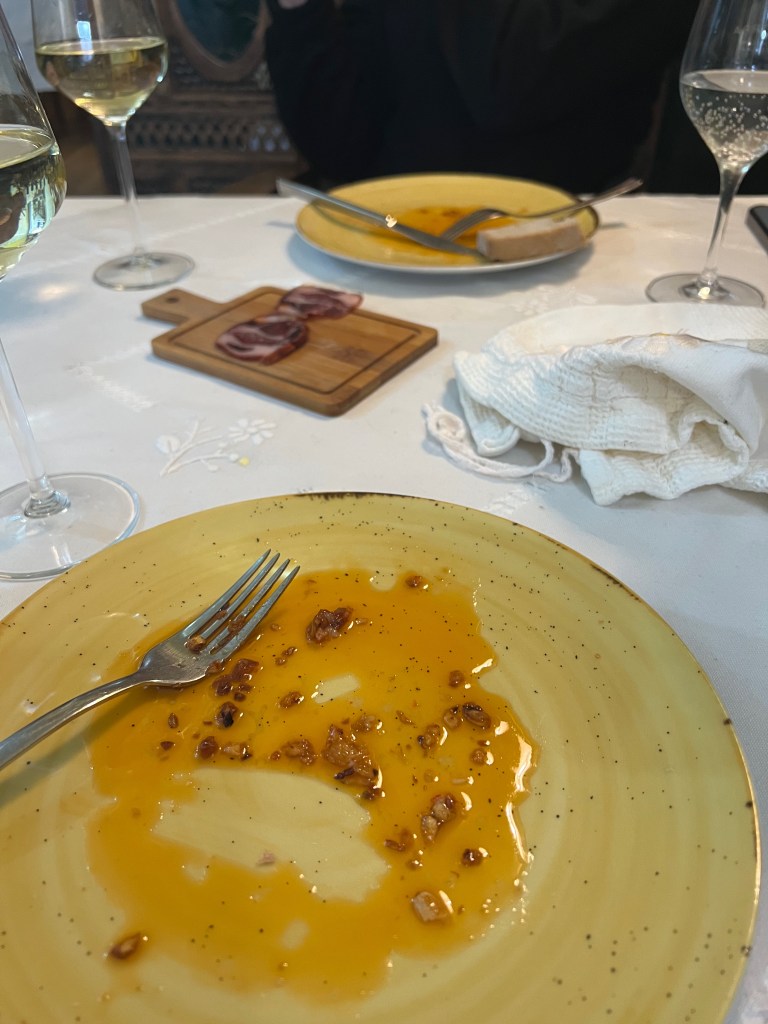
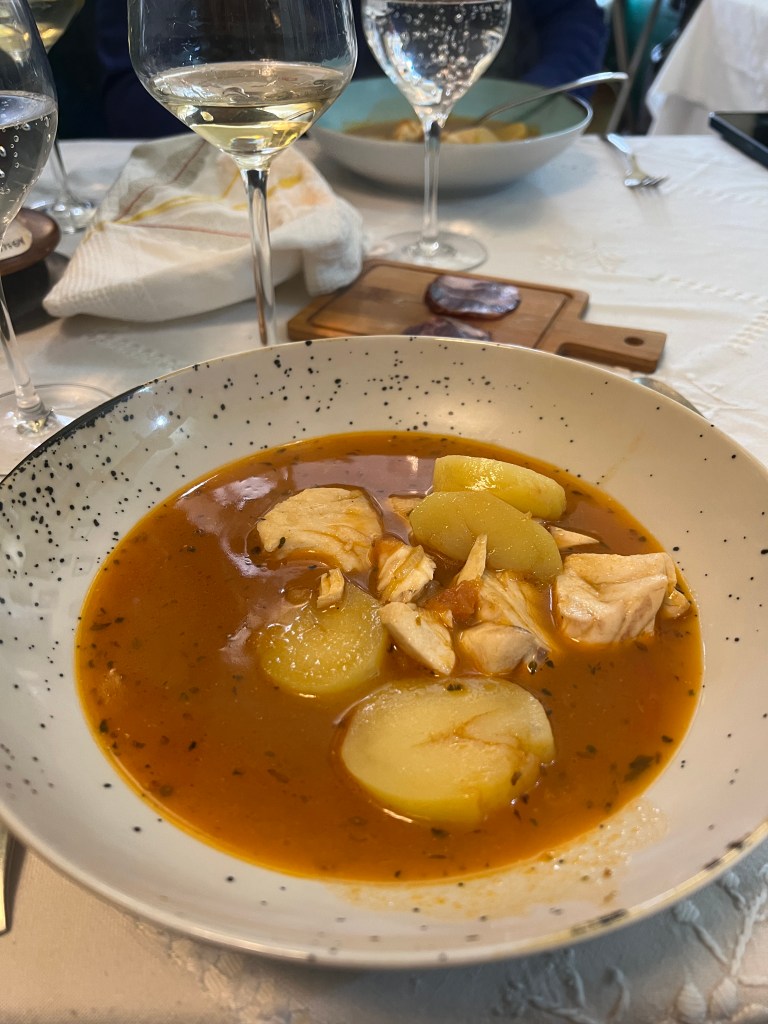
The stop in Évora was intended as a bit of throwaway day to get over the worst of jet lag before proceeding to the Algarve the following morning. We lucked out in that our room was ready early and we took a one hour nap and went in search of lunch. We set out on foot from our hotel with vague directions from the front desk on where we might find a late lunch. We passed a tiny restaurant and poked our head in to see if they were still serving lunch. The proprietor, Miguel, invited us to have a seat and chatted with us for a few minutes. In her research for the trip, Jill had read that one of the cultural norms of Portugal is that every interaction is personal and that exchanging pleasantries an integral part of entering every shop or restaurant. By the time we had finished our initial chat, Miguel told us we didn’t need a menu because he was going to curate a representative regional lunch for us for our first meal in Portugal. It was a pretty magical experience. The lunch was simple and absolutely delicious. Miguel delivered a tray of charcuterie while he went to work on the starter. The starter was shrimp cooked in olive oil and garlic. When we were finished with the starter, Miguel was loitering near the table. After a few minutes he kindly told us that he wouldn’t clear our plates because we hadn’t yet sopped up the remaining olive oil and garlic with the rustic bread. And he was absolutely right to do so because that was one of the highlights of the meal!

Miguel helped us avert this crime against the local cuisine

The main was a local stew of white grouper and was also amazing.

Grouper never tasted so good

The funniest moment of lunch came at the outset when we’d finished pleasantries and Jill asked if we should have a bottle of vinho verde. Vinho verde is a slightly effervescent white wine that is unique to Portugal. We were both proud of that bit of local knowledge and thought it would give us street cred with Miguel. Miguel’s response to that query was “Absolutely not! Vinho verde is only drunk in the north of Portugal! Our local wines are far superior.” He did not steer us wrong. This was our first exposure to the fact that EVERY region of Portugal is proud of its local wine and apparently justly so.

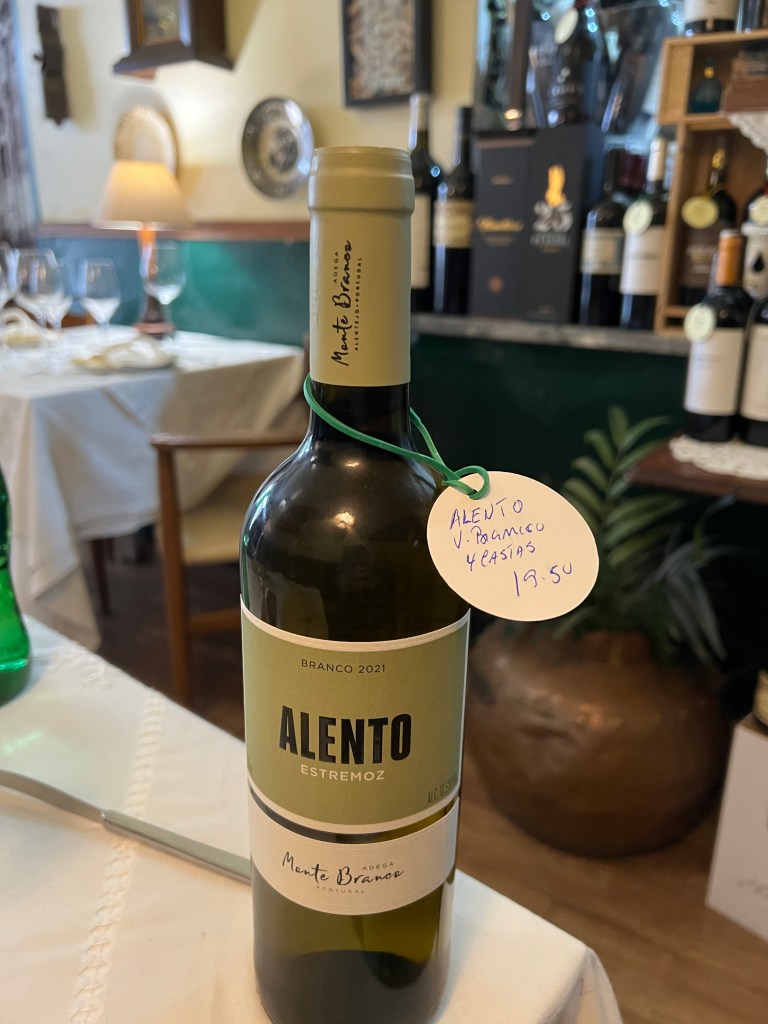
Miguel’s wine pairing for our lunch

We spent the rest of that day wandering around Évora in tourist mode:

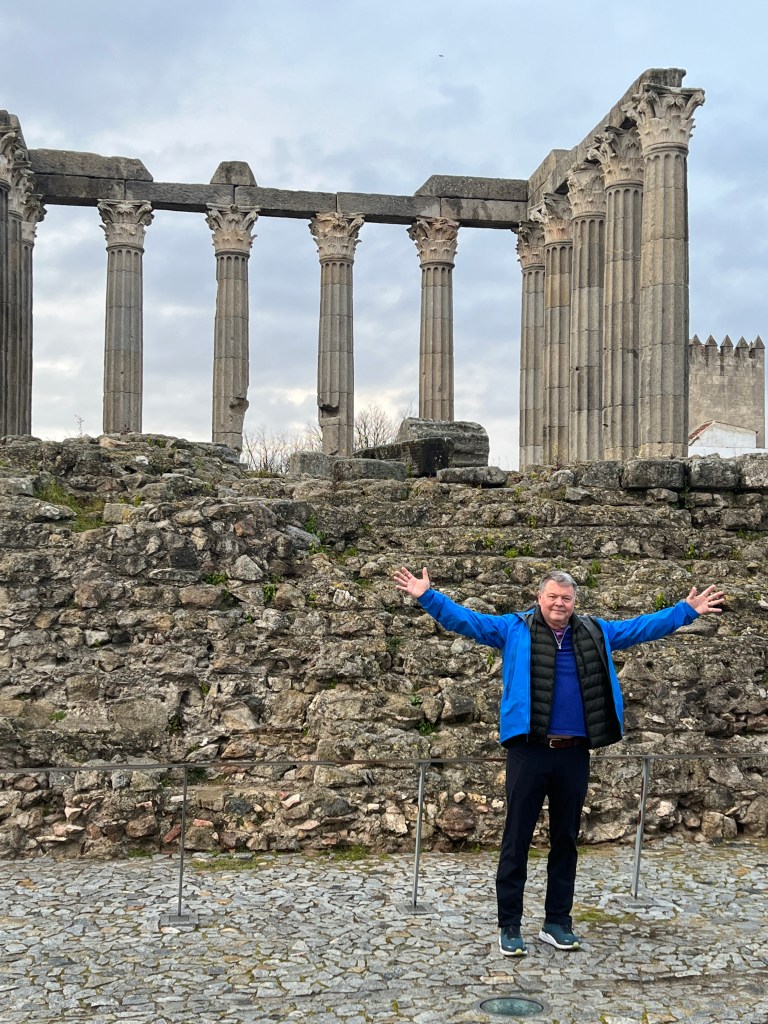
Roman temple: ✅

Ossuary: ✅

As darkness descended on Évora we made our way back to the hotel and regrouped from the day over tapas and another glass of the local wine. In another nod from the universe, the seating at the hotel was family-style and we ended up sharing a table with our soon-to-be new friends Martha and Jacques. As it turned out Martha and Jacques are expats who live in Tavira, one of the neat towns in the Algarve that was on our agenda for couple of days later in the trip. And they just happened to be staying overnight in Évora on the way home following a shopping trip to Lisbon. Martha is a retired teacher from Canada and Jacques is from France, they’re both lovely and have lived in Portugal for several years. We had a great conversation about what it was like to actually live in Portugal and agreed to meet up with them for lunch in Tavira when we were on their home court to hear more about their experiences. That conversation with Martha and Jacques was the first conversation we’d had with expats living in Portugal and lit the spark of the idea that it might be something we could do.

One of the things that makes the idea of moving to Portugal possible at all is that we’ve been surprised and relieved at how much English is spoken in Portugal. We assume that is because Portugal has been a tourist destination for the UK and also Canada for decades. Whatever the reason, it’s super handy to have English as a crutch while we are learning Portuguese because Portuguese is HARD!