
After a good night’s sleep in Évora we set off for Lagos (pronounced LAHgosh), a town of 31,000 people and our first destination in the Algarve. Lagos is very nearly on the southwest tip of Portugal and about a 2 1/2 hour drive from Évora. The drive took us south through the middle of Portugal and we were treated to a beautiful landscape of rolling vineyards and cork forests for most of the trip. Once again the roads were fantastic. As we got closer to the southern coast we continued to see vineyards, but the cork forests started to give way to citrus groves.
Ever since our Costa Rican adventure, Jill and I use Waze as a navigation aid whenever we are in uncharted territory. We got the giggles as we were approaching Lagos, because there was what seemed like an interminable series of roundabouts and while we were still exiting one roundabout the Waze lady would chime in again with directions for the next roundabout: “At the roundabout, take the second exit…”.
On the topic of navigation, one of the things that I have come to take for granted is our teamwork when driving in unfamiliar situations. My job is to drive, but Jill is the one thinking three moves ahead and providing clear guidance on the navigation front. That comes in handy when there’s a roundabout with 5 exits. The Waze lady may say “Take the third exit”, but Jill provides clarity in the form of a “You’re going straight through” or “You’re exiting the roundabout on the left…”. What’s nice about that dynamic is we are a team and even when it doesn’t go well we laugh about it. That came in very handy on this trip because every hotel we stayed at was in an ancient town whose master plan did not include autos or anyplace to park.
As we entered Lagos proper in a misting rain, the Waze lady directed us to the Lagos Avenida Hotel (highly recommended!) and as we caught sight of the hotel it became clear that there was not anyplace obvious to park. Fortunately, the farmers’ market in Lagos is right next to the hotel and there was a little place for me to pull off the road and wait while Jill popped into the lobby to get instructions on where to park (a dance we are getting fairly good at). Jill went inside and was back out in 30 seconds and directed me to a spot with a big X on it in front of the hotel – which apparently is the Portuguese symbol for loading zone. We offloaded our bags and the nice lady in reception gave us directions to the car park a few blocks away at the marina. Along with the directions, she went out of her way to tell us that our vehicle would be completely safe in the marina car park and that there was nothing to worry about. She wasn’t being patronizing – she was really proud to report that Portugal is extremely safe. So, we hopped back in the car and headed off to the car park, which I would not have found without Jill’s assistance. Pro tip: Turns out two sets of ears to hear instructions are extremely useful when you are in unfamiliar surroundings.
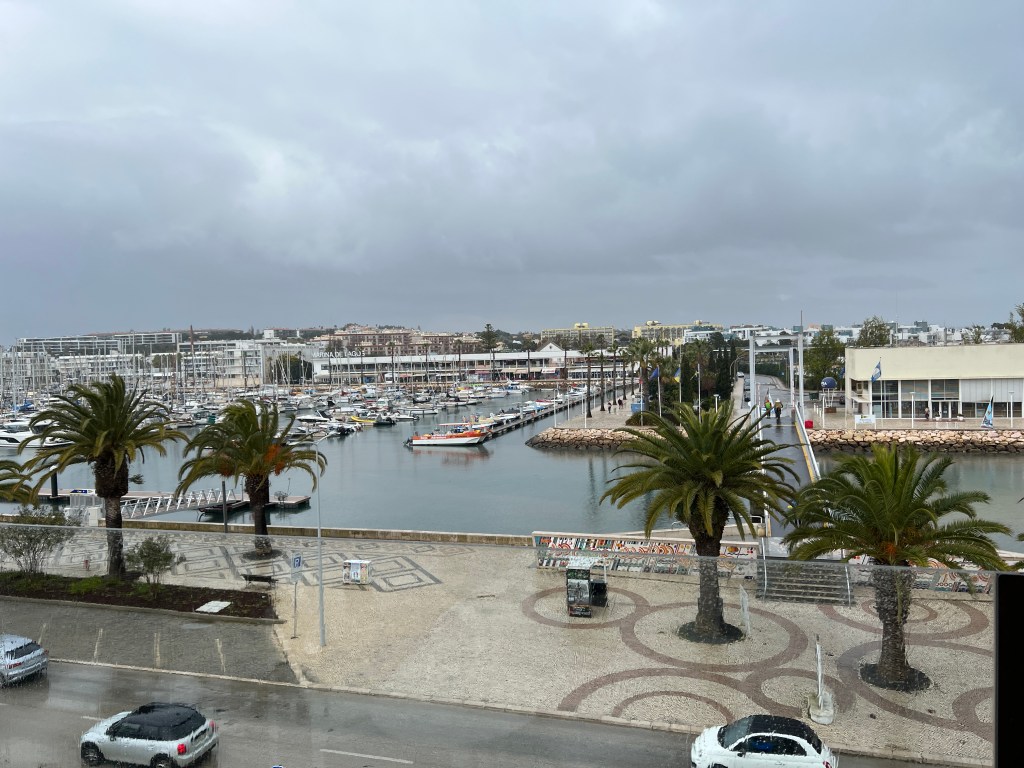
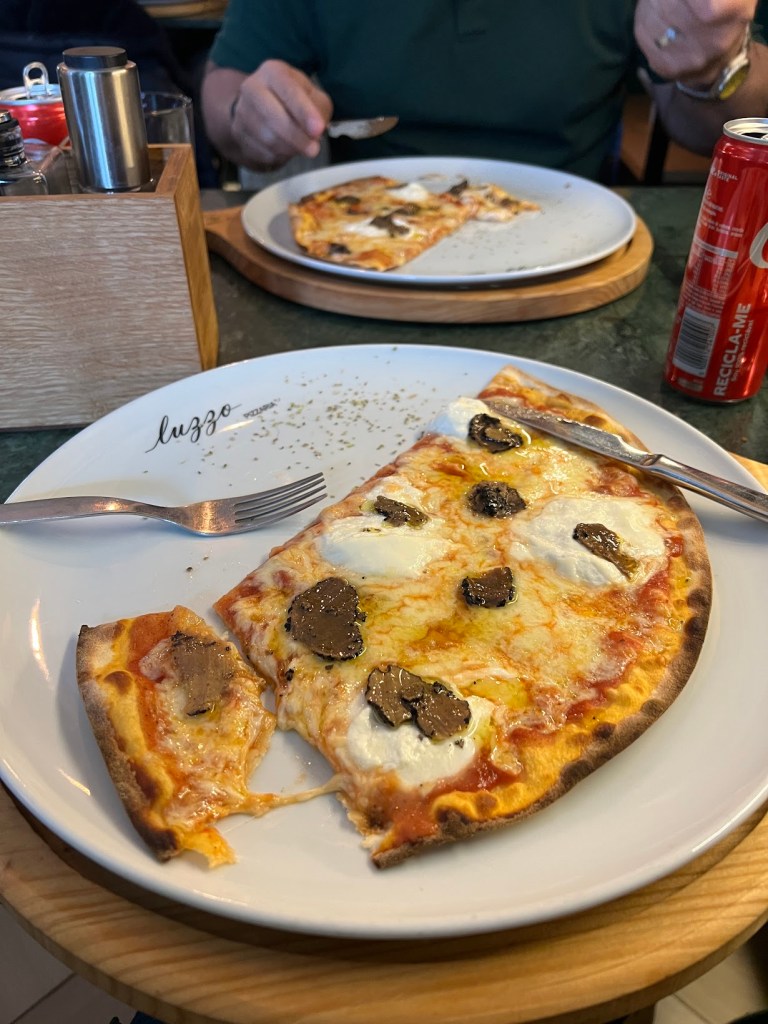
After parking the car we popped back to the hotel, got our room keys, tucked our bags in our room, and set off to find lunch in the rain. As Jill can attest, I can eat pizza for every meal and never get tired of it. So, it’s usually the case that our first meal in a new location is likely to be pizza. Lagos was no different. We found a fantastic pizzeria called Luzzo right off of the main square and waited out the rain with a wonderful truffle pizza!
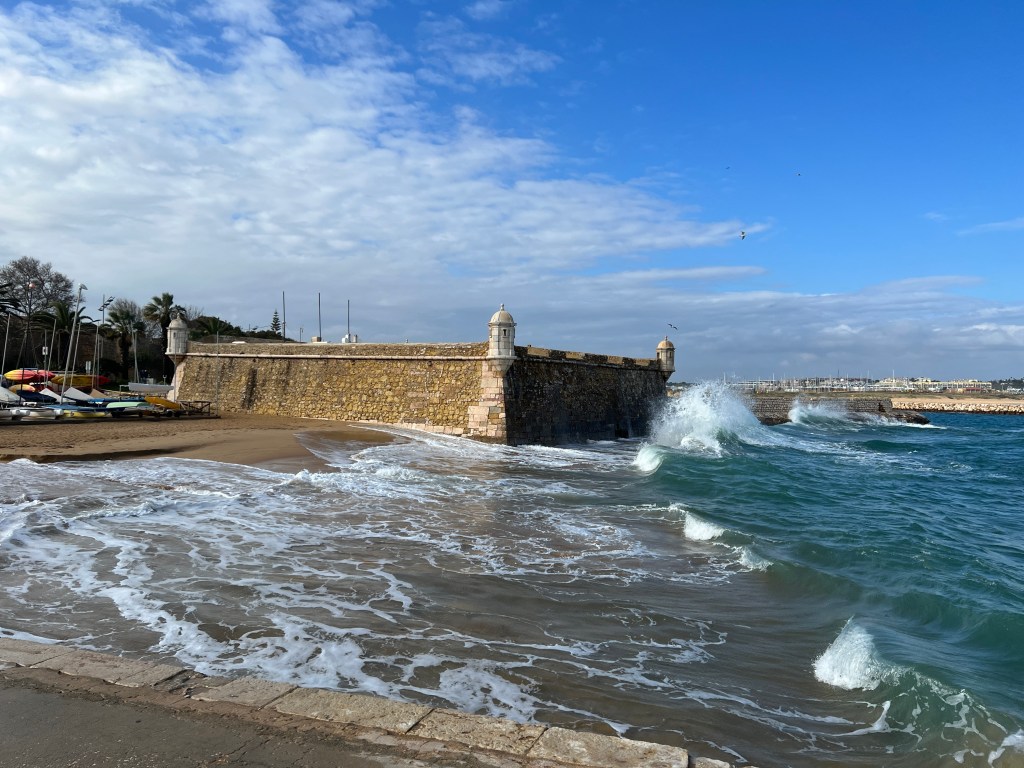
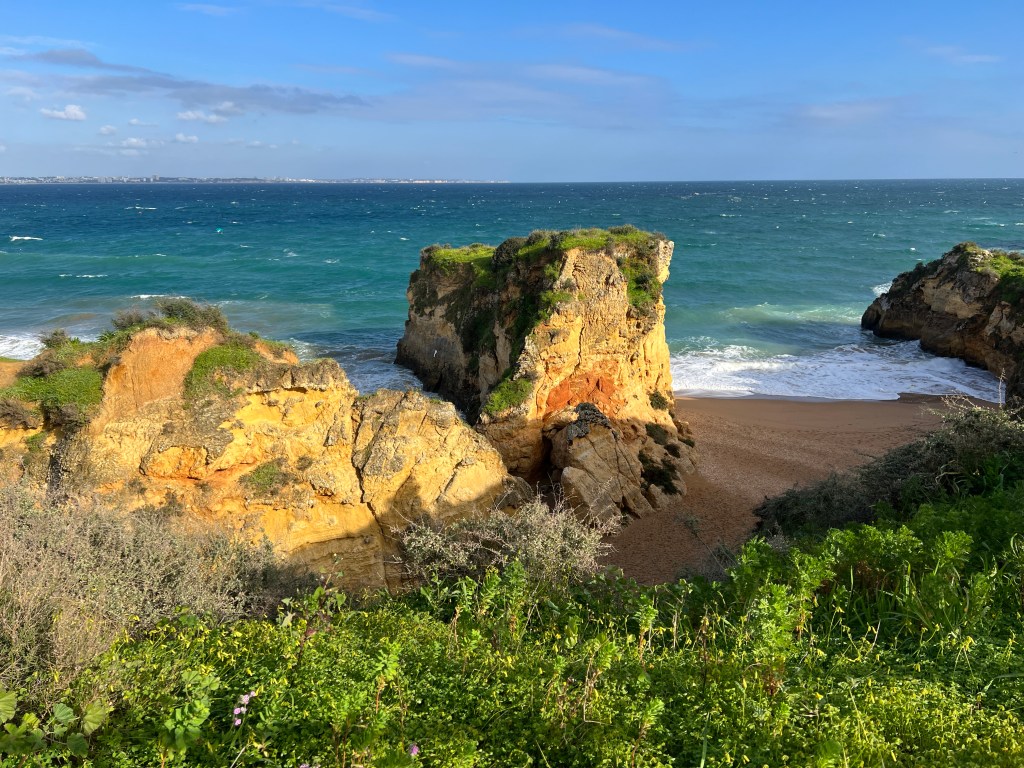
By the time lunch was over the rain had mostly cleared and we set off for a walk along the coastline. The scenery on the southern coast of Portugal is pretty amazing.
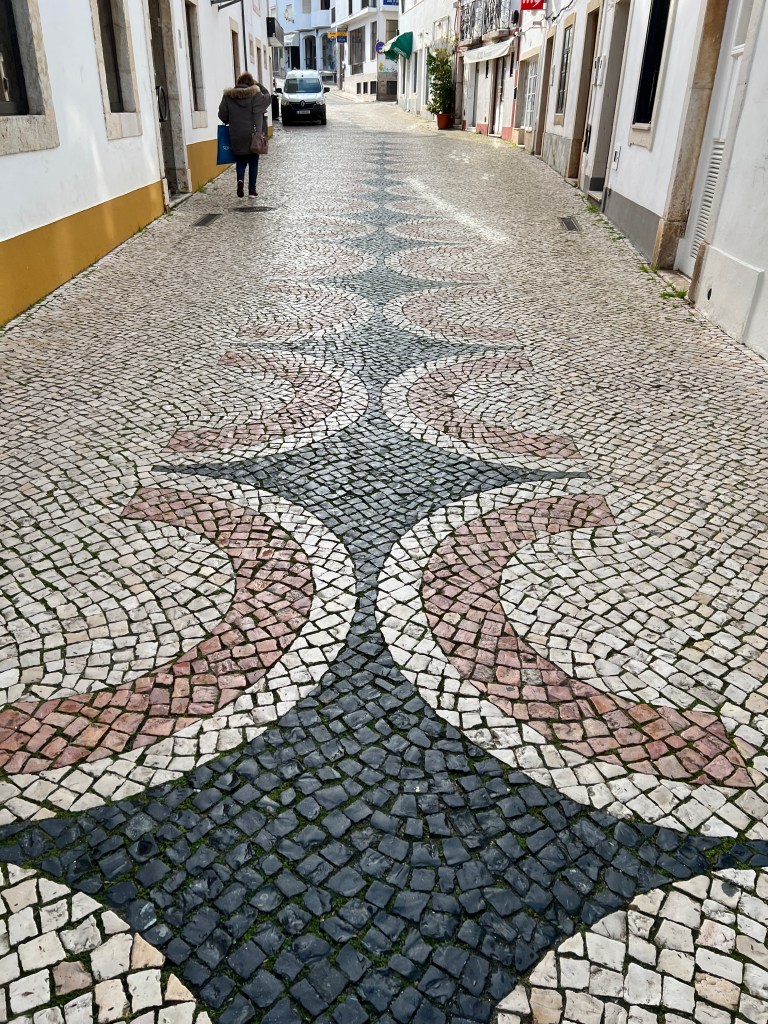
We walked along the coast for a couple of miles and doubled back to explore the old town of Lagos. There’s an interesting juxtaposition of old and new within the town, with street art being celebrated (generally to the exclusion of graffiti).
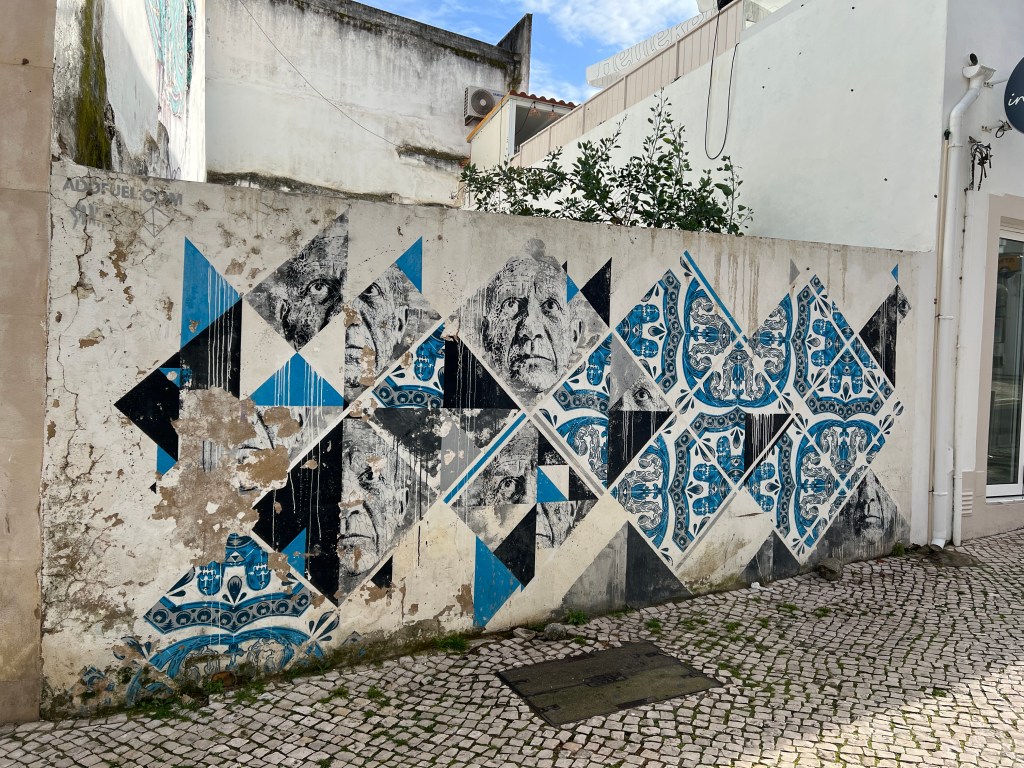
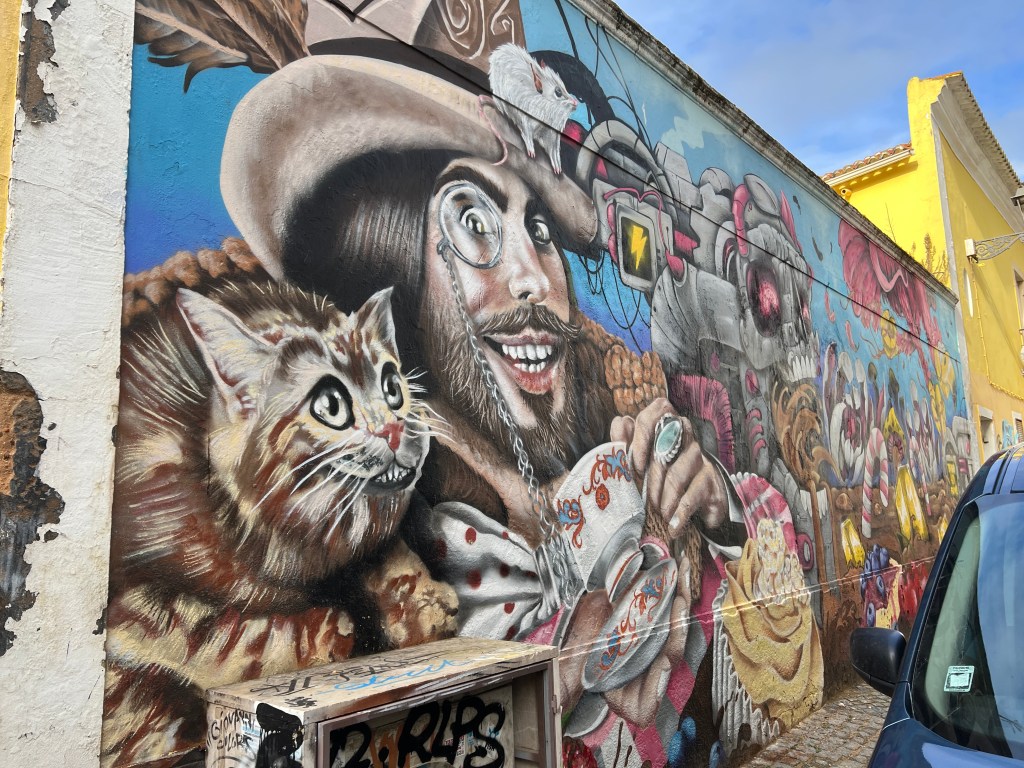
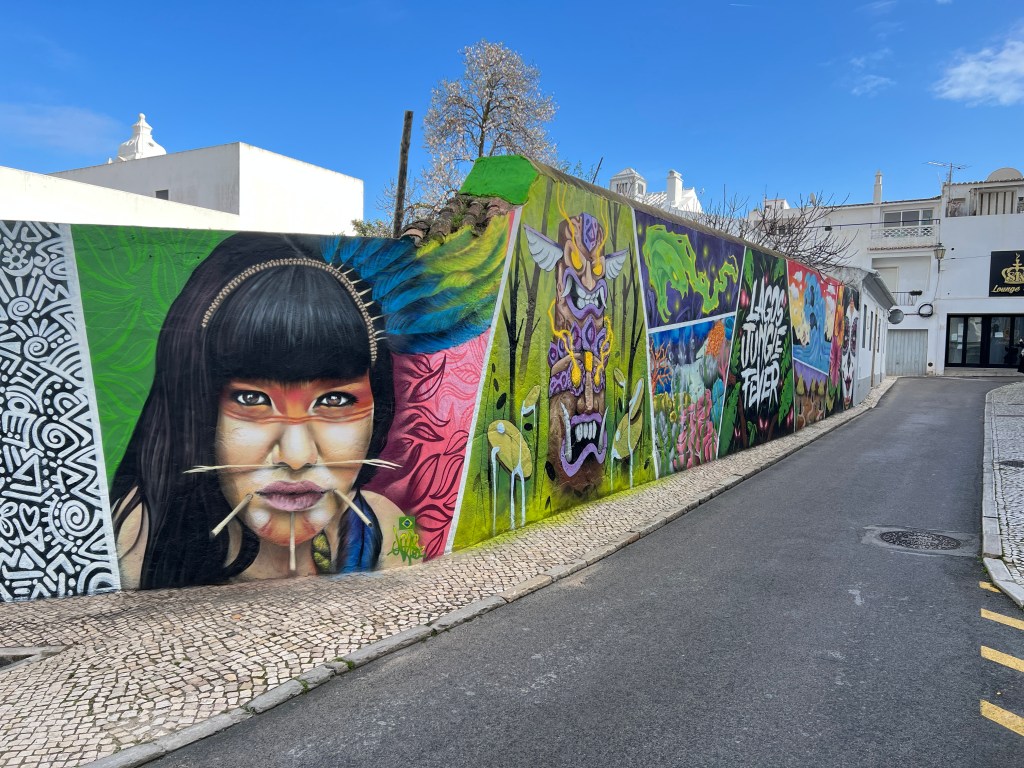
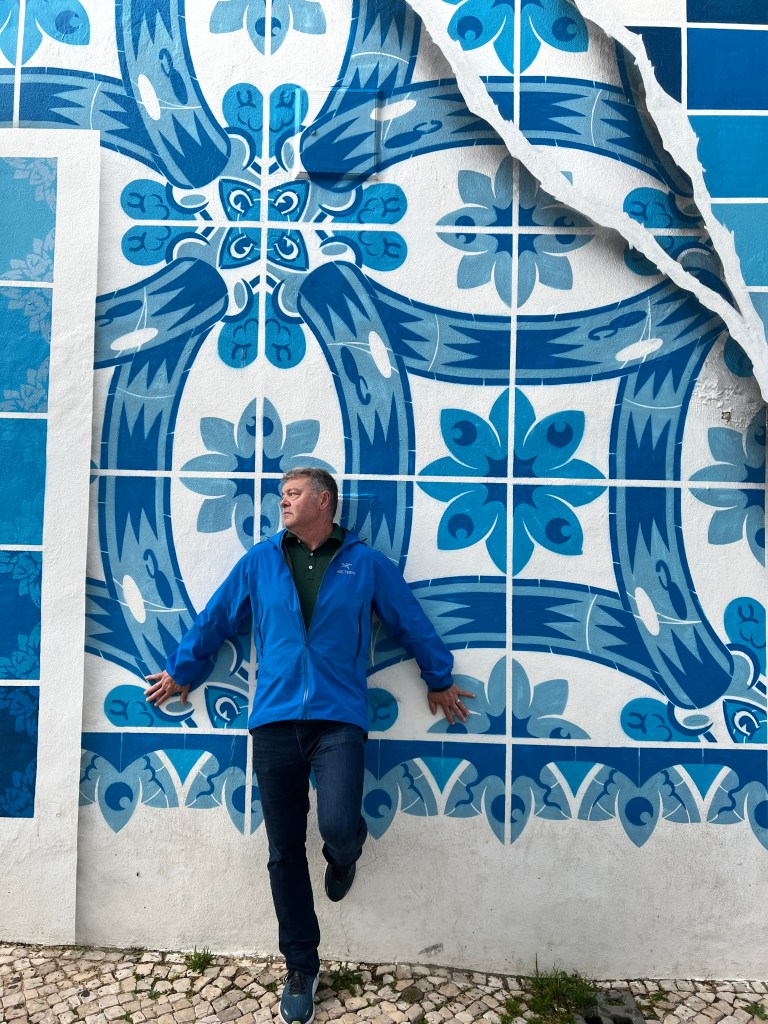
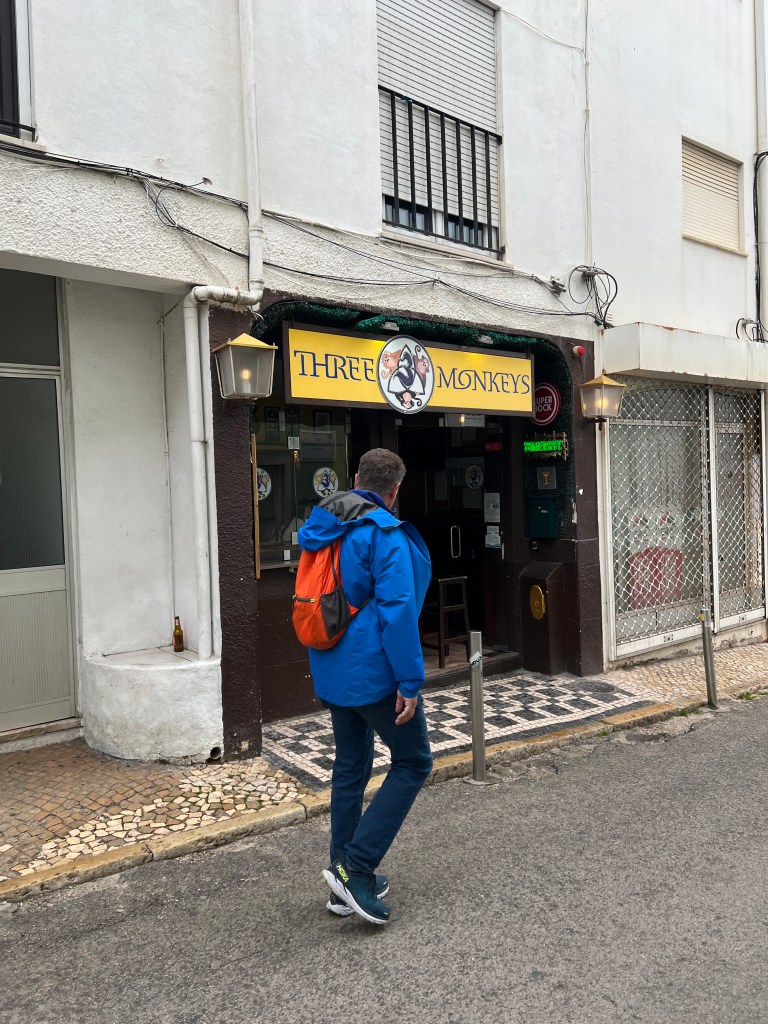
As I mentioned previously, there’s a heavy tourist bent to the Algarve with the tourist traditionally being English, Irish, German, or Canadian. For example, most of the restaurants announce that they serve a Full English Breakfast and there are a number of proper English and Irish pubs. That’s another plus for me, as I really like a proper meat pie. We quickly found our favorite English Pub in Lagos called the Three Monkeys. And we also found a restaurant called Pie, where we had a dinner of fantastic steak and onion pies.
We’d had a full first day in Lagos and fell into bed and slept like the dead. The next morning we had a leisurely breakfast at the hotel. One of my favorite things about Europe is that the breakfast that’s included with your hotel stay is almost always delicious. We lingered over an extra cappuccino after breakfast at the Avenida and, for the first time, had a serious conversation about what it would be like to move to Portugal. We both had an existential freak out about 5 minutes into the conversation and we agreed to table it and just be tourists for a while.
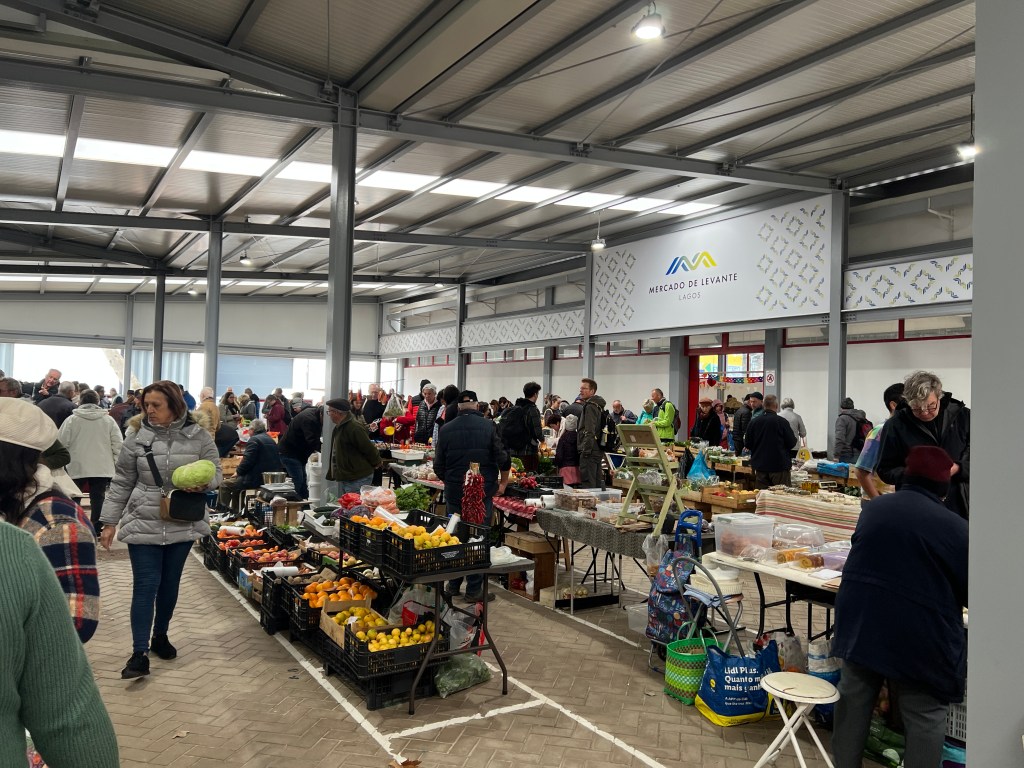
As we’d discovered when we first arrived, the Lagos Avenida Hotel is right next to the Lagos farmer’s market, which is open daily and appears to be well attended by the locals. After breakfast we wandered next door to the market to see the wares. For whatever reason wandering the stalls of the market and seeing the fantastic produce on offer was very reassuring and took the edge off of the freak out from our breakfast discussion about moving to Portugal. Similar to our experience in Costa Rica, we subsequently learned that every town in Portugal is ready to declare their farmer’s market to be the BEST in the country.
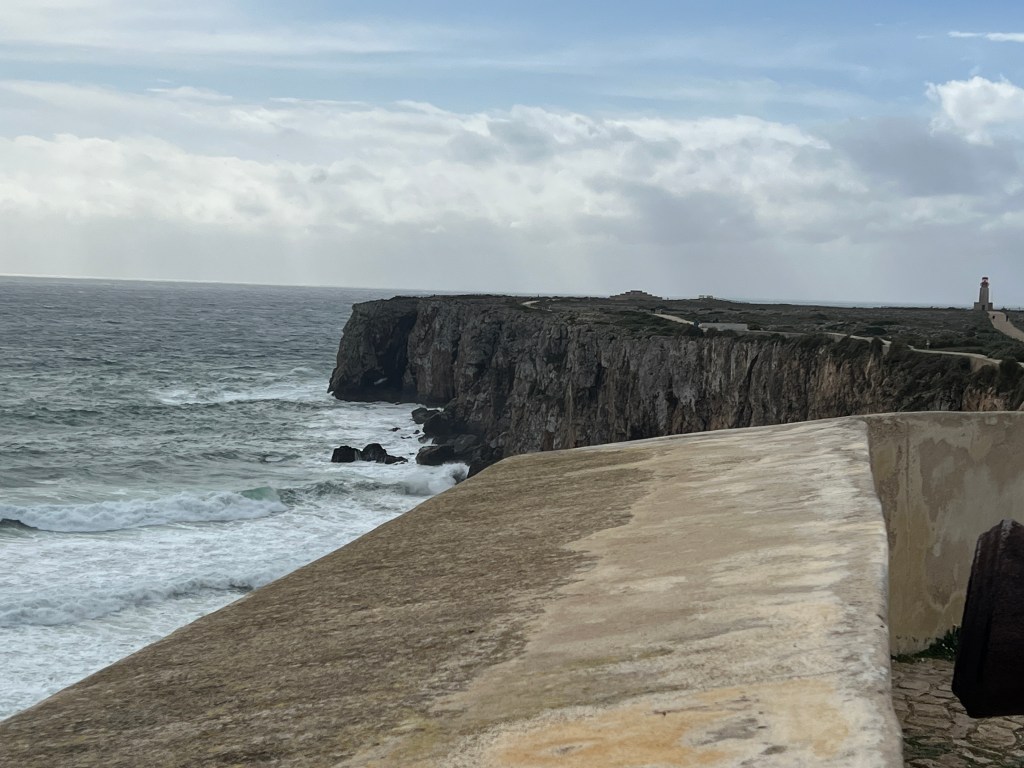
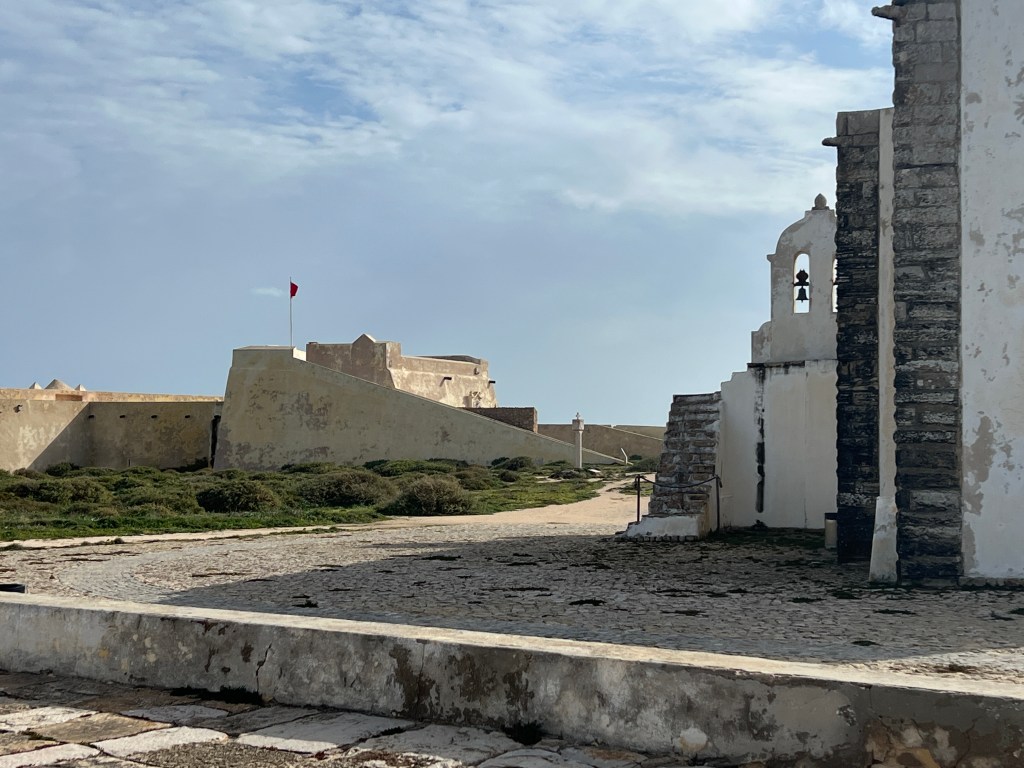
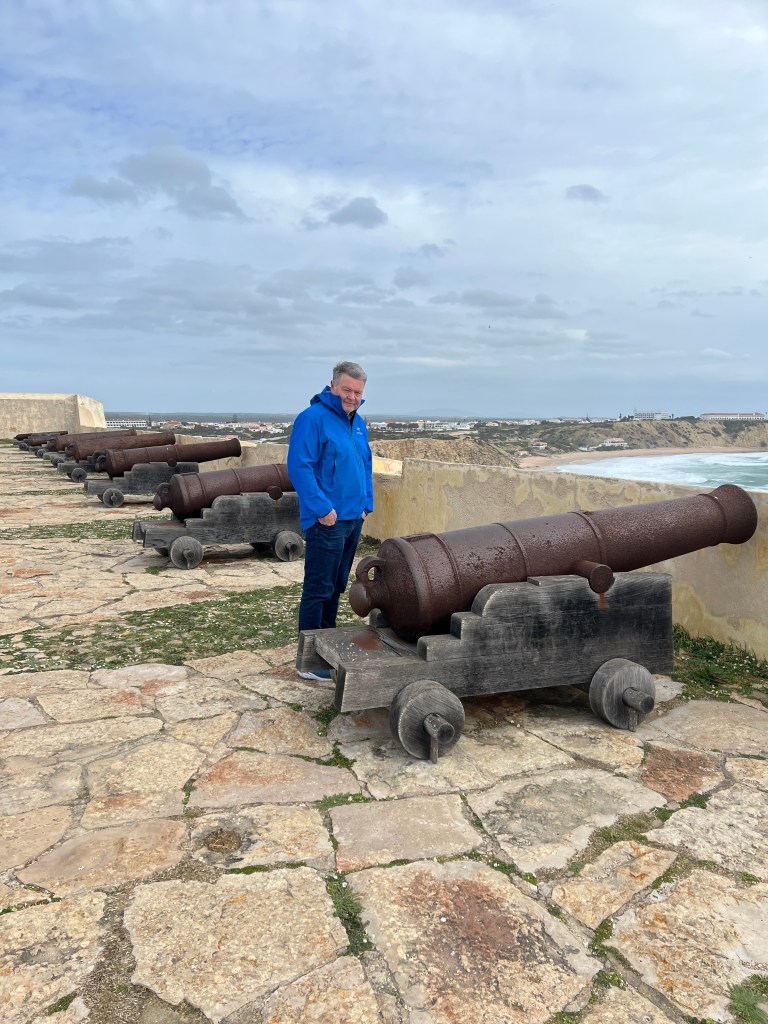
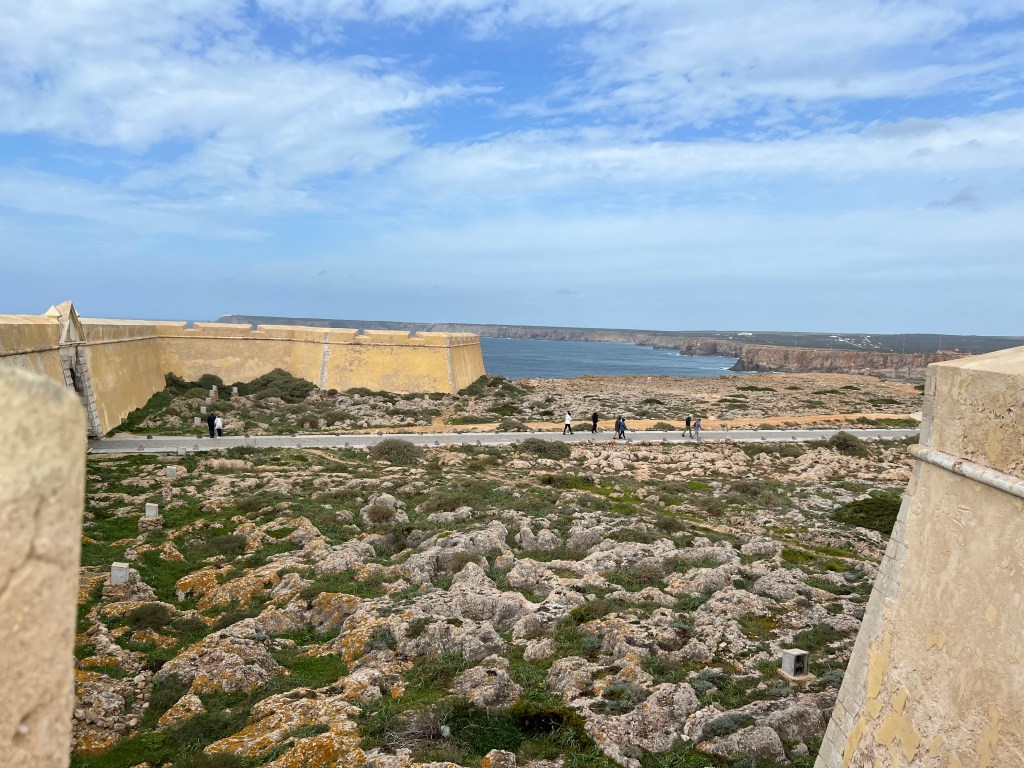
Jill’s original itinerary with Stephanie for that day called for us to go visit the fort in Sagres (Fortaleza de Sagres), which is a massive edifice on the westernmost tip of continental Europe. We stuck with that plan and hopped in the car and made the 30 minute trek to Sagres.
After we wrapped up at the fort we piled back into the car and started heading back toward Lagos. We’ve found that the smallest things can be meaningful learning opportunities when you feel like a fish out of water in another country. We decided to pull into a Repsol station in the sleepy little town of Vila do Bispo and top up our rental car with diesel. We pulled in and the sign on the pump said that we needed to pay in advance. There was not a credit card terminal on the pump so I handed Jill 50 Euro and she went off to the cashier. What followed was a comical pantomime where I started pumping and then the pump stopped and then Jill stepped out of the cashiers office and yelled at me to stop touching things! Then she came back out and gave me the the thumbs up to proceed. After I’d finished pumping Jill came walking back to the car with our change and regaled me with the exchange that she’d had with the gas station operator (who was lovely). After exchanging the required pleasantries, the man told Jill that the notice about paying advance was largely discretionary and taught her the proper protocol for gassing up in Portugal.
I’ll conclude this post by sharing that protocol:
When you pull into a gas station in Portugal, select a pump and exit your vehicle. If there is no credit card terminal on the pump, you make eye contact with the person in the cashiers office. If you don’t look “dodgy” he will give you a thumbs up and you can set about filling your tank whereupon you pay inside after you are through. If he gestures for you to come inside, then you have failed the “doesn’t look dodgy” test and you have to pay in advance.

 Jill and Todd in Portugal