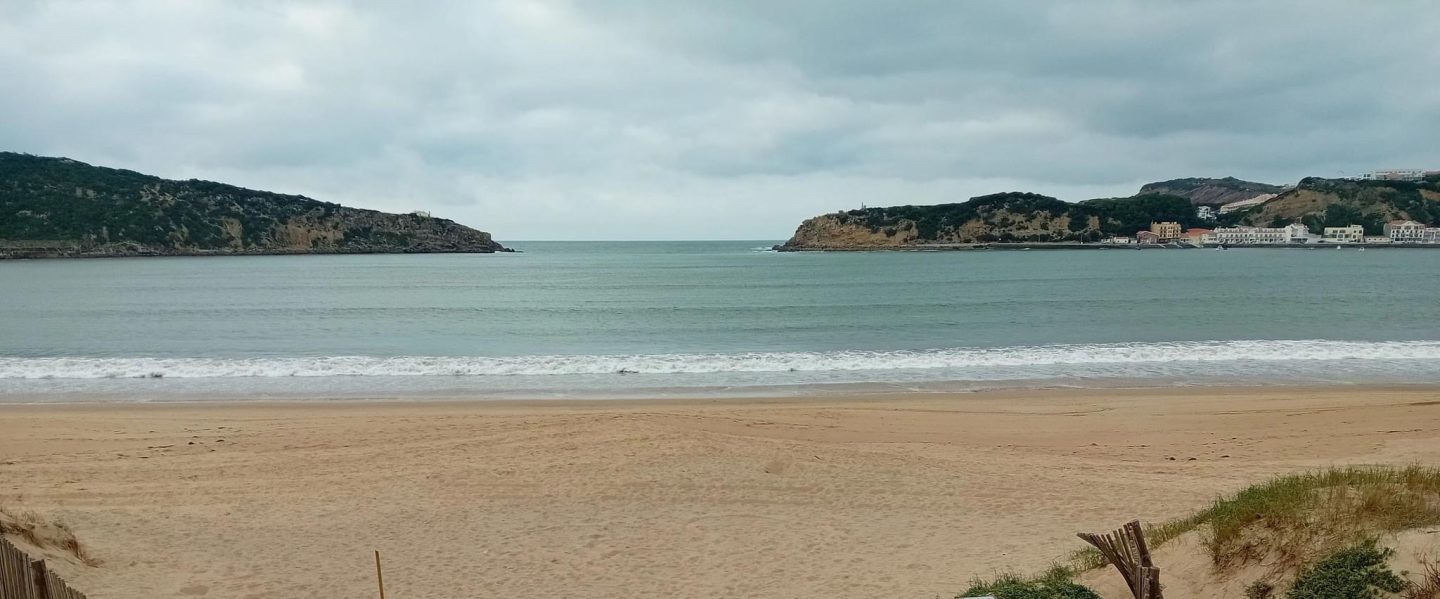

With our first trip to Portugal being an unqualified success and knowing that Carvoiero is a viable option for an expat adventure, Jill and I sat down to talk about next steps. The Algarve has a whole lot to like with only three potential negative marks on the ledger:
- We’ve been told the Algarve is feast or famine in terms of high season being very crowded and low season being deserted – with a lot of businesses either on restricted hours or closed outright during low season.
- The Algarve seems to have taken on the flavor of the tourists and expats who flock there, meaning that it’s feels more like a resort area than an authentic Portuguese cultural experience.
- It’s a 3-ish hour drive to the Lisbon airport. There is an international airport in Faro, but, at least at the moment, all US departures fly into Lisbon. That would make for less-than-ideal logistics for our periodic returns to the US and also fetching any visiting dignitaries.
Because the Algarve has what approximates a Mediterranean climate and is also a National Geographic highlight reel of beautiful landscapes, none of the above concerns rise to the level of serious deterrent.
The logical next step in our evaluation process was to make a second trip to explore the Silver Coast, the coastal area starting just south of Lisboa and stretching north to O Porto. Jill went into research mode and plotted out a 9-day September itinerary that would have us fly into Lisboa and out of Porto with overnights in five different candidate locations.
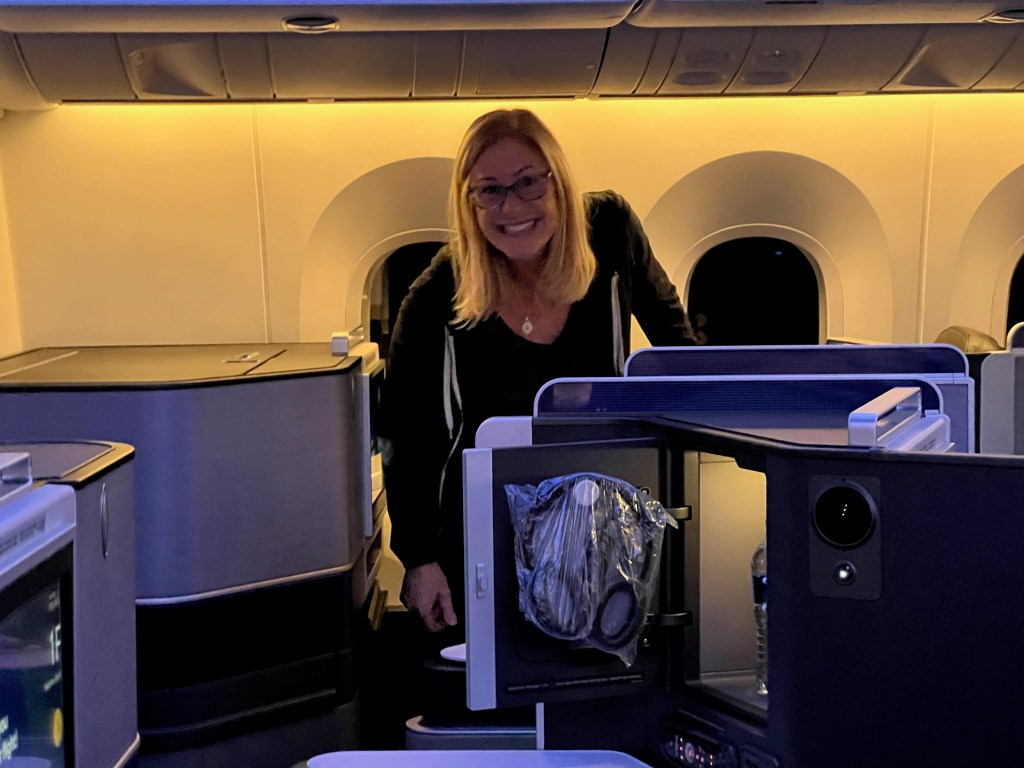
On September 19th, we boarded a United flight in Austin and made our now-familiar trek to Newark and on to Lisbon. We got a last minute offer to upgrade to business class for a very reasonable price on the EWR-LIS leg, which we jumped on. The only downside to that was the two available lay-flat seats were on different sides of the aircraft.
On approach to LIS we came in over the hills. There was a blanket of fog in the valleys which left just the hilltops protruding like islands in a sea of clouds. And it was just after sunrise so the fog was sparkly from above. It was one of those right place at just the right time moments. I waved my arms to get Jill’s attention from across the cabin to make sure she took a look out the window. It was a pretty magical moment for me and felt like a good omen for the visit we were embarking on.
During the walk from the plane to immigration, Jill and I compared notes on how much sleep we’d gotten on the flight and what we’d each had for dinner. We also found that we were both over the moon excited to be back in Portugal, which is probably a good sign for people who are thinking about moving to Portugal.
The high of being back in Portugal, aided by the sleep we’d gotten in our fancy lay-flat seats, carried us through immigration, baggage claim, and on to the SIXT car rental counter – where we were assigned a Renault Clio. We bopped up to the garage, got our key, and we were off!
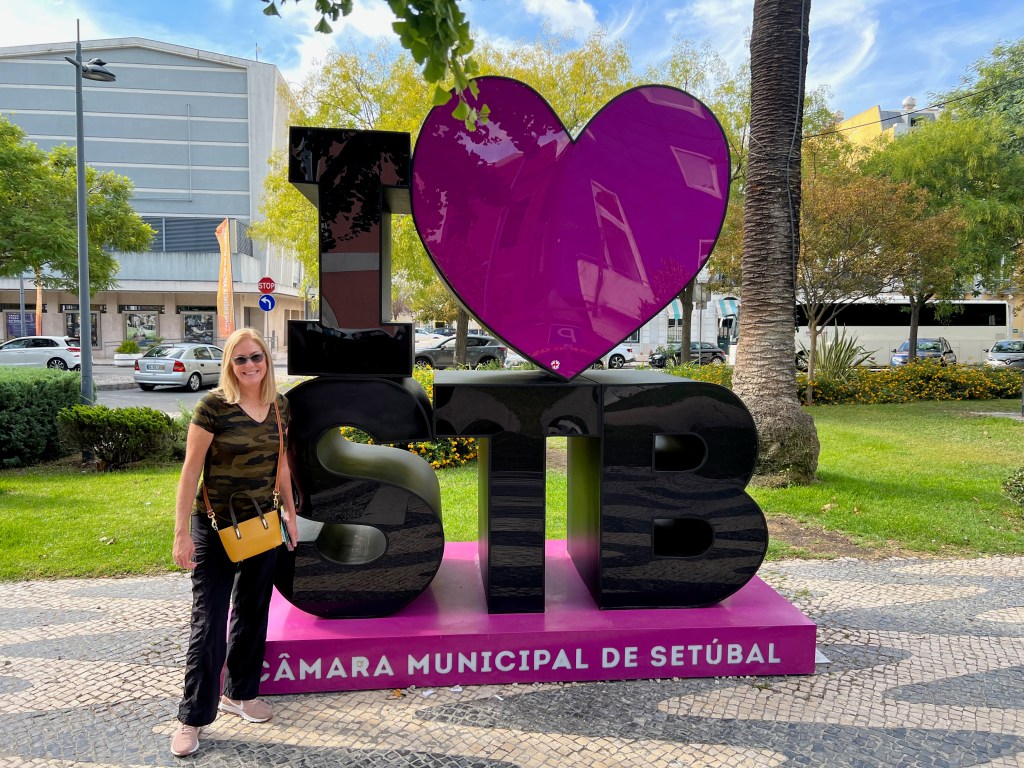
Our first destination was Setúbal (pronounced SHTOO-ball) a city of a little over 100,000 people about 30 miles south of Lisboa on the Sado River. Setúbal sits at the mouth of the estuary formed by the Sado.
Jill had booked us into the Rio Art Hotel, once again curated by Rick Steves and company, in Setúbal for one night. We only did one night in Setúbal for a couple of reasons:
- With our early morning arrival in LIS and Setúbal being less than an hour from LIS we had the benefit of being there by 10AM and having the full day to explore.
- We knew Setúbal was likely on the larger end of what we were looking for so we just wanted to get a feel for how a larger town felt after our Algarve experience.
First off, the Rio Art Hotel is fantastic. It’s centrally located, the rooms are very nice, and Ana, the manager, was exceptional. In keeping with our pattern we arrived at the hotel a few hours before check in time, but because we’d learned in Lagos that the parking space marked with a “X” in front of the hotel is for loading and unloading we pulled into that spot like the professionals we aspire to be, dropped our bags with Ana and she gave us directions to the pay car park a few blocks away. And when I say “directions”… Ana told us exactly where the lot was and that the credit card reader was broken so we needed to make sure we had € coins to feed the machine when exiting the lot the following day. In our experience little things like that make such a HUGE difference. Armed with that knowledge it was easy enough for us to make sure we had the €4 in coins the next day to exit the lot. The people in Portugal really seem to go out of their way to be helpful.
We walked back to the hotel after dropping the car at the car park. We asked Ana what we should see in Setúbal and ended up having a 45 minute conversation with her, where she poured us a small pre-lunch glass of Setúbal’s local wine. By the end of that conversation we had a new friend.
While Setúbal is lovely and we can see why people would like living there, we very quickly decided that it wasn’t right for us. There were a couple of factors that disqualified Setúbal from consideration, but the major one is that we couldn’t find any significant green space within walking distance of city center. If it was just me and Jill that wouldn’t be a showstopper, but we have Woody and Bulleit to think about. The Goldilocks setup for us is finding a spot to live with green space to walk W&B but also walkable to all of the city center destinations – market, cafe, restaurants, etc. We plan to have a car, but our goal is not to need it on a daily basis.
This is by no means a scientific observation, but our experience in Portugal is that houses with gardens (what we in the US call yards) or any kind of green space tend to be on the edges of towns. Most of the towns in Portugal are at least 600 years old and some of them go back to Paleolithic times. As such they tend to be compact with high-density housing and favor cobblestones and hardscaped plazas. There are a few green parks here and there in the larger cities, but those seem to be exceptions.
All of that is to say that we were rapidly trending toward the conclusion that we needed to find a town that was big enough to have everything we need, but not so big as to preclude us finding a walkable place on the edge of town suitable for a combined 160 pounds of Golden Retriever.
A benefit of deciding early that Setúbal was too big is that it freed us up just to be tourists and take in the city.
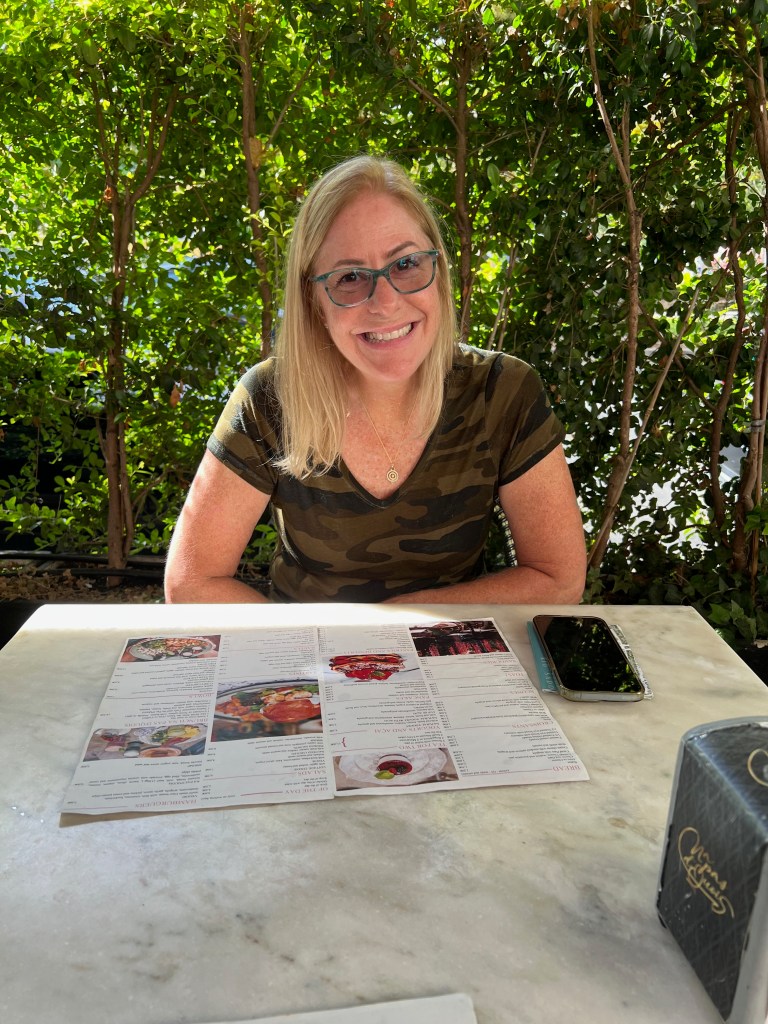
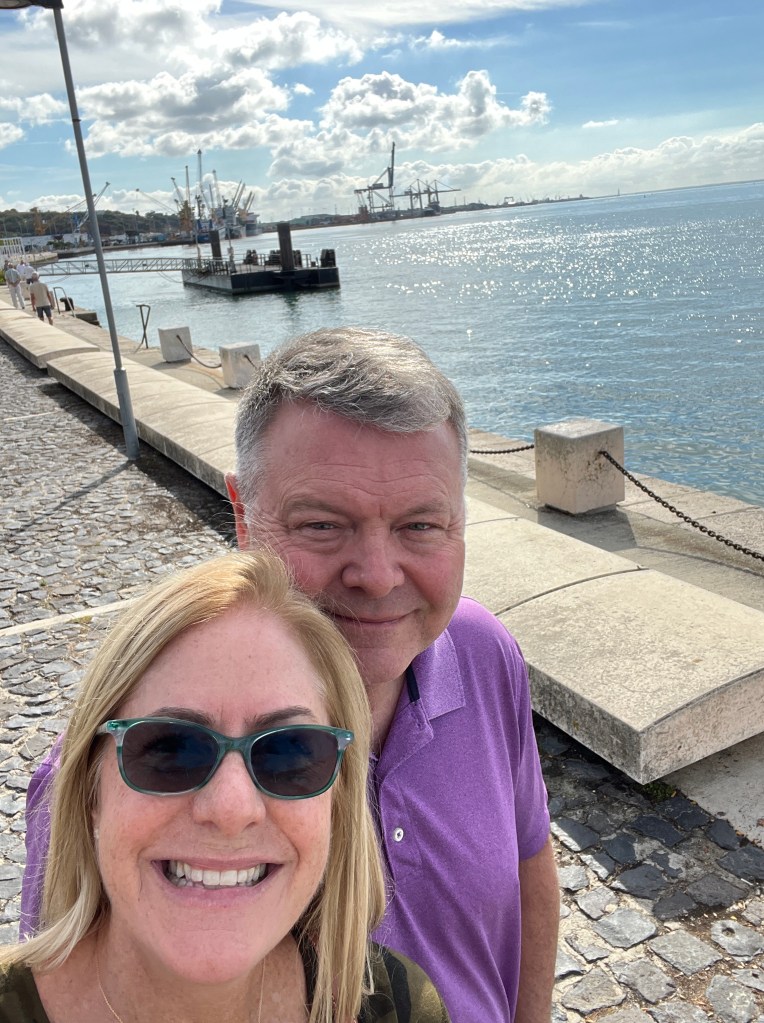
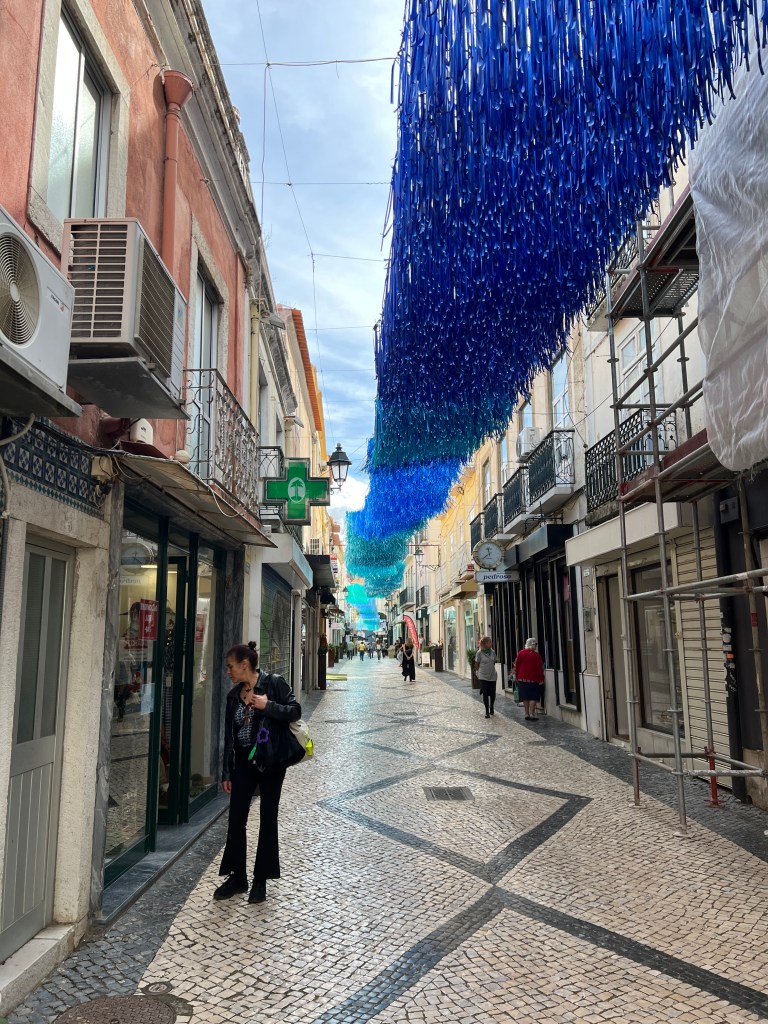
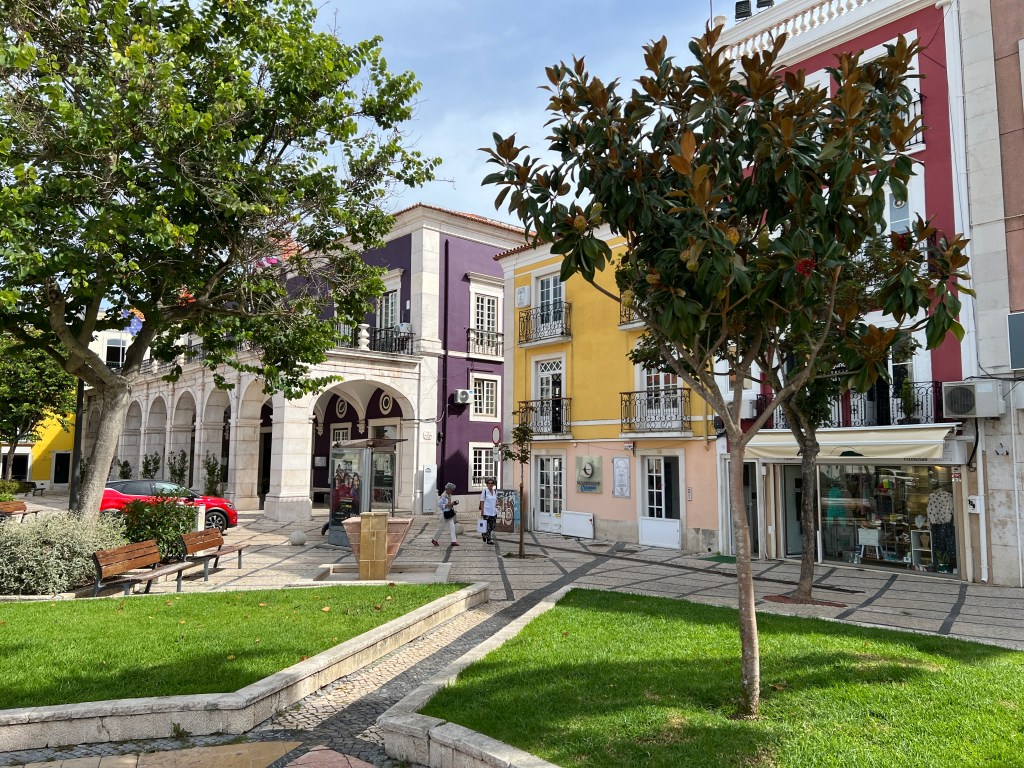

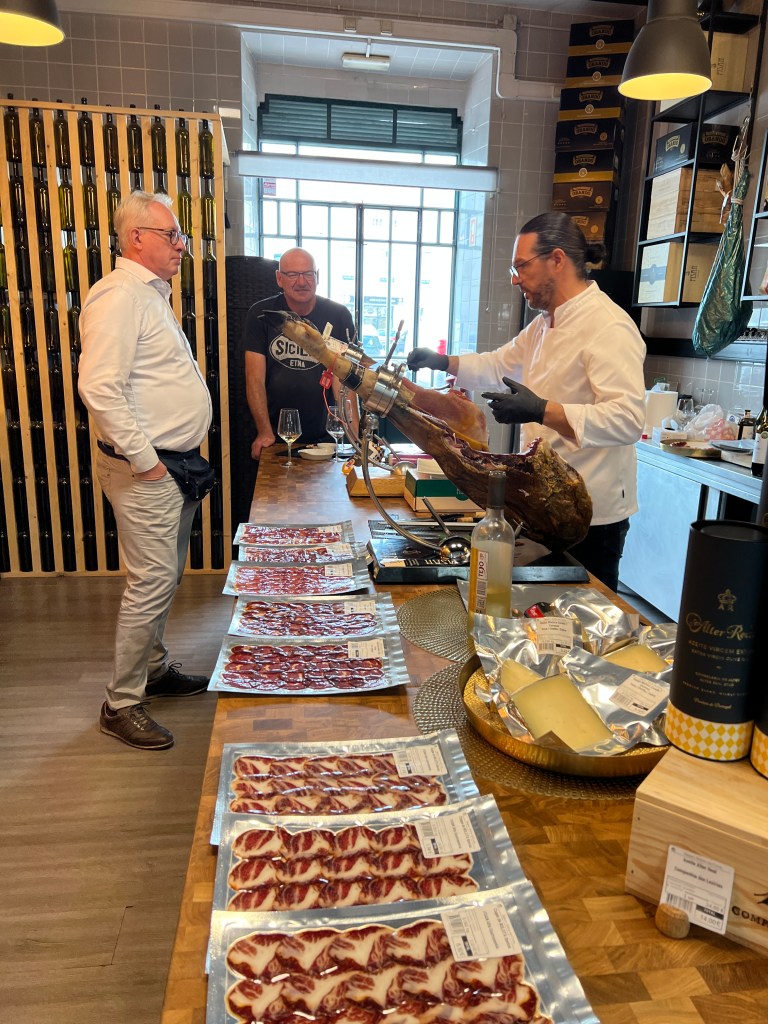
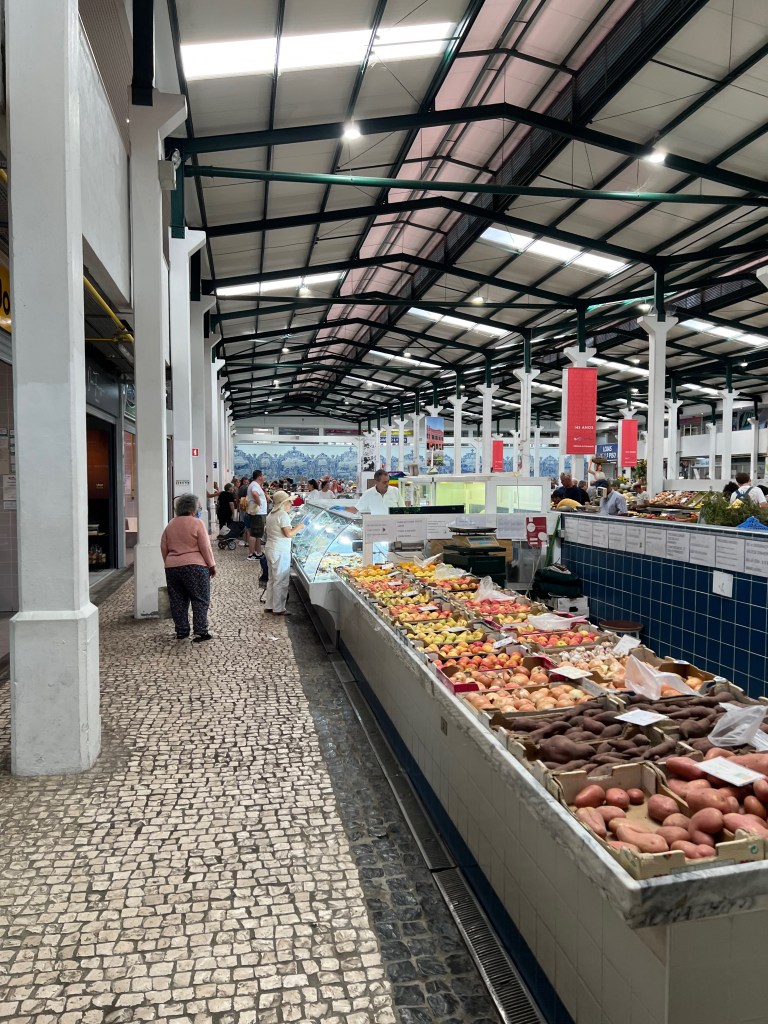
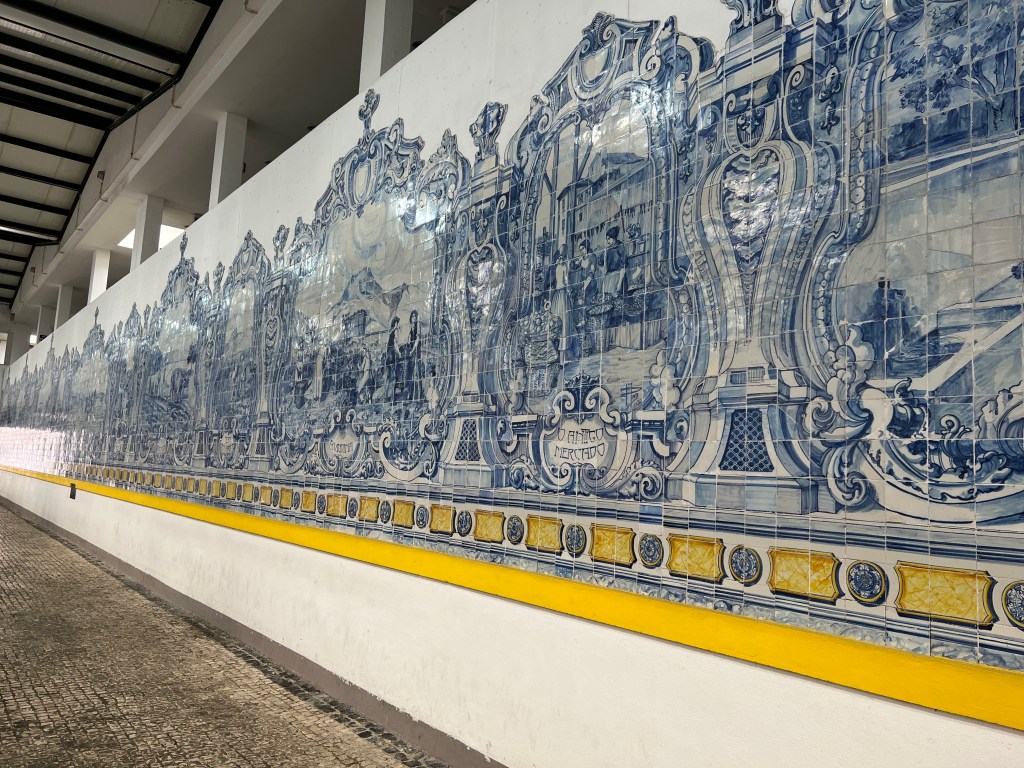

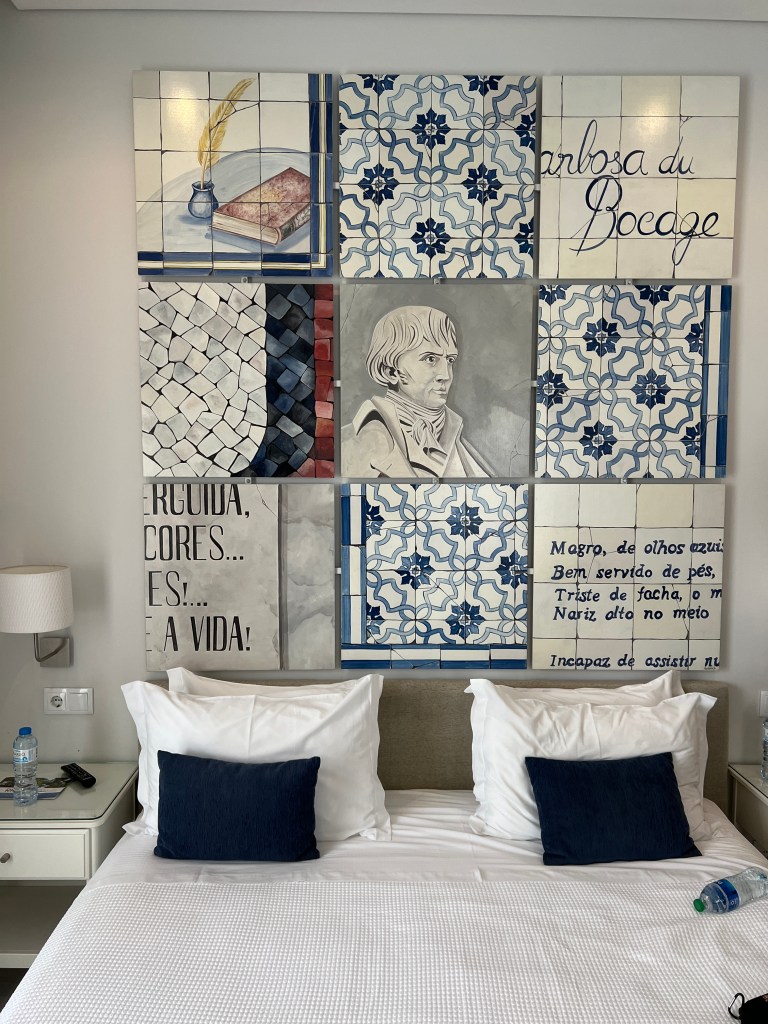
After a full day of strolling around Setúbal, we found a spot on the main square for a gin and tonic and some live music. Then we went to a pizza place (shocker!) near the hotel for dinner before collapsing into bed in a jet-lagged stupor.
We awoke the next morning to the sound of rain on the windows, but by the time we’d had our breakfast the rain had slacked enough for me to make the jog to the car park to retrieve our trusty Renault Clio – after nimbly thumbing my €4 coins into the kiosk at the car park. I pulled into the loading zone just as Jill was finishing the checkout process. We bid farewell to our new friend Ana, loaded our bags into the car, and set off for our next scheduled stop – Cascais.
Cascais (pronounced cash-KAI-eesh) is about an hour from Setúbal and half hour pretty much due west of Lisbon. At this point a little background is in order…
Following our first trip to Portugal, we (and by we I mean Jill) had started getting our ducks in a row to apply for Portugal’s D7 visa, which would allow us to become full-time residents in Portugal. On the recommendation of some friends we’d engaged an attorney, Ana Rita, in Lisbon that Jill and I both like to help us get our Portuguese tax ids, called NIFs. The process of getting our NIFs required us to get a bunch of documents including tax returns, pay stubs, and passports apostilled by the Texas Secretary of State for Ana Rita to submit to Financas – basically the Portuguese IRS. Interestingly, Ana Rita’s firm had to “sponsor” us in our application for NIFs. I assume this puts some onus on attorneys to vet their clients. One of the other requirements for applying for a D7 visa is that we open and fund a bank account in Portugal. Knowing that we had another scouting trip coming up, Ana Rita had connected us with our banker, Monica, at Novo Banco, one of the two banks in Portugal that will allow non-residents to open an account. Ana Rita had forwarded all of the necessary documents to Monica. Monica had done all of the pre-work and we’d transferred €1,000 to fund the account on opening.
Process note: When you open a bank as a potential expat in Portugal you actually have to fund the account in advance of the account being fully opened.
And all that was left to get our accounts fully opened was for us to present ourselves at a Novo Banco branch and sign all of the account applications. However, Monica is in the university town of Coimbra, which was not on our path for this trip. So, once we’d set our itinerary, Monica coordinated with the Novo Banco branch in Cascais to have our paperwork waiting for us to sign at a 2PM appointment on the day we were in Cascais. More on that later.
Jill and I got a good feeling about Cascais from the moment we rolled in. Cascais is picturesque in all dimensions and has a population of around 15,000 people. Jill had booked us into the Hotel Baia, which fronts the beach in Cascais and is right in the middle of town. Once again we’d arrived a couple of hours before our room was ready. We stashed the car in the Hotel Baia’s underground parking garage and set out to find a cappuccino and a ham and cheese sandwich for second breakfast.
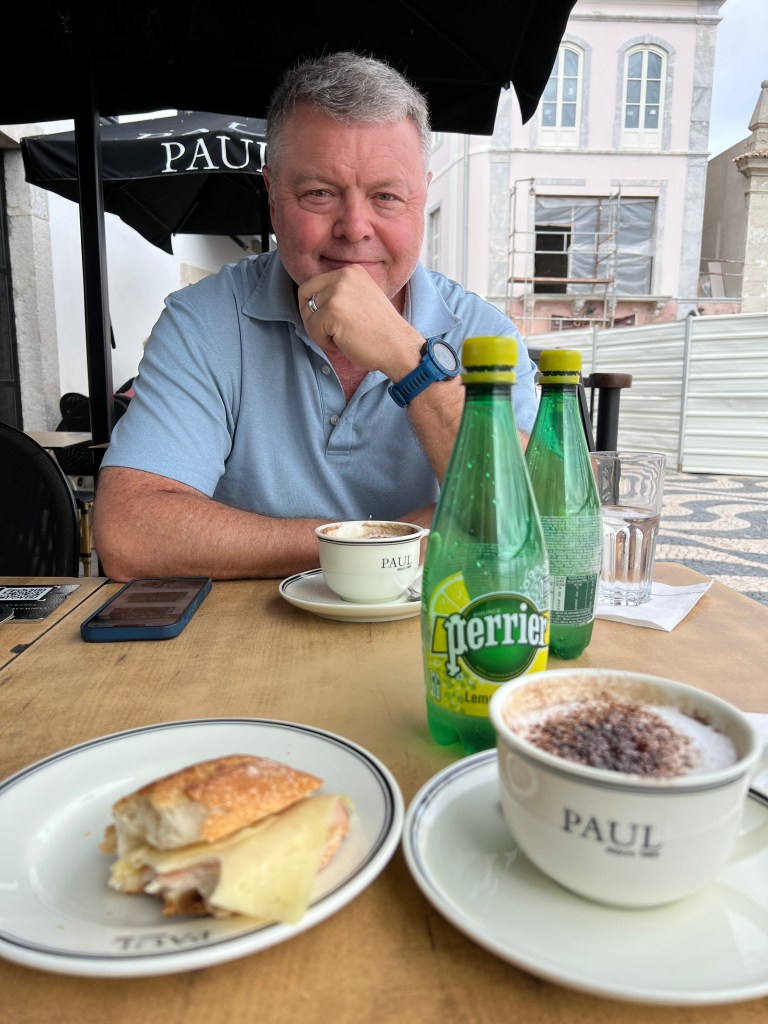
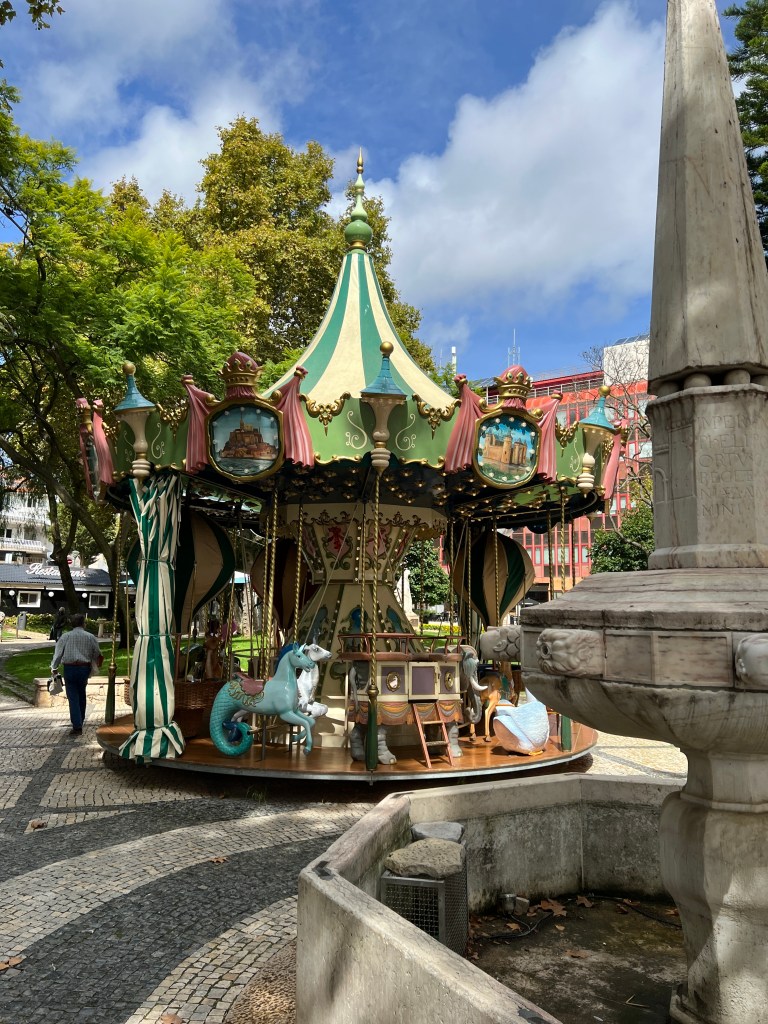
Freshly fortified with caffeine and a tasty sandwich, we set off to explore Cascais. The first thing we did was walk to the Novo Banco branch to see how far it was for our meeting that afternoon. Turns out it was a 10 minute walk from the hotel. Along the way we passed a nice tree-lined park with a couple of restaurants around the edge of a large grassy area and a carousel, conducive to city living with W&B.
Cascais has a beautiful protected harbor with a nice beach.
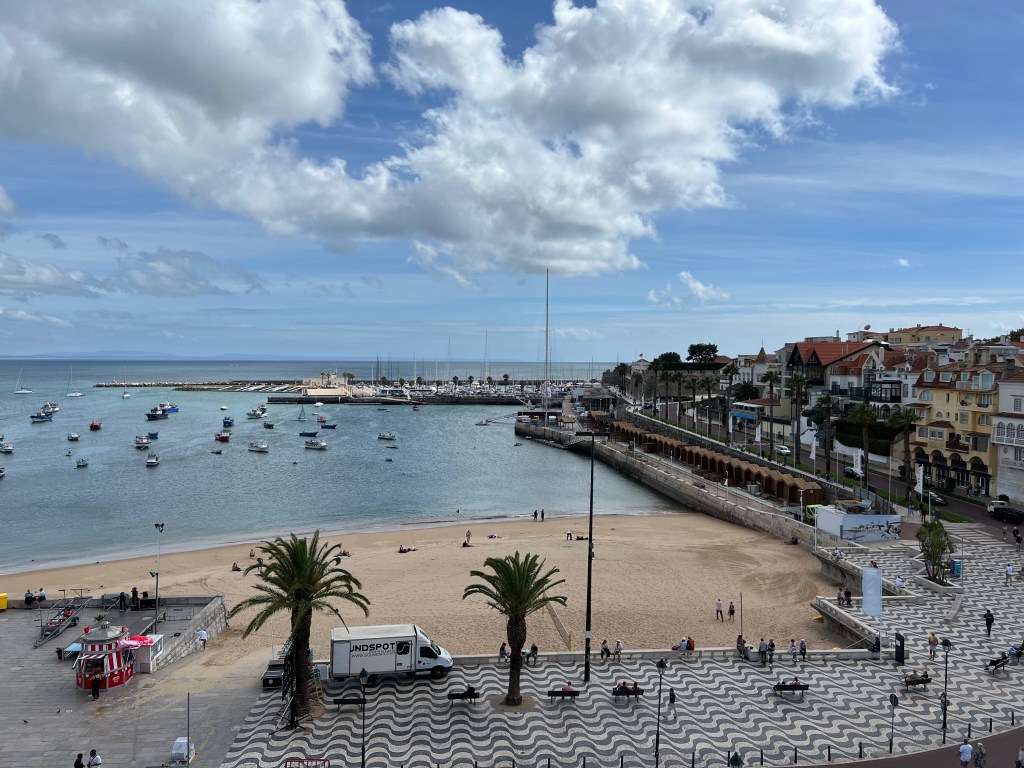
We wandered all through the hilly neighborhood to the right in the picture above. Lots of cute houses and restaurants.
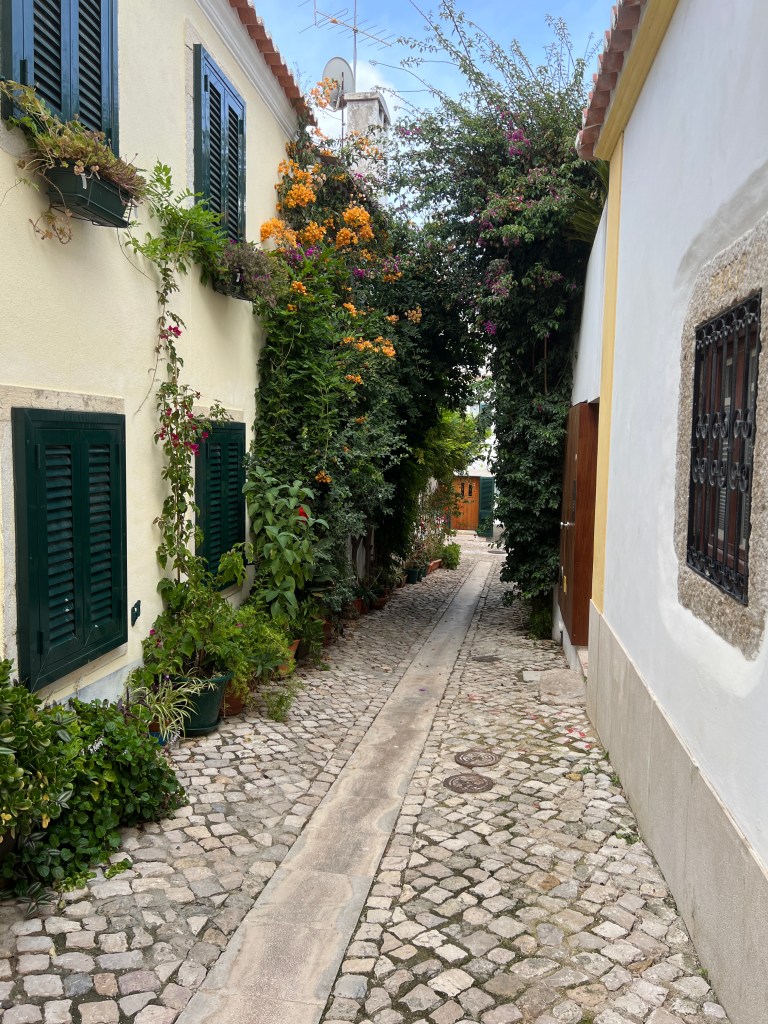
By then our room was ready so we headed back to the hotel to check in. It was a beautiful day and the hotel had a rooftop dining area so we popped up there after checkin for lunch.
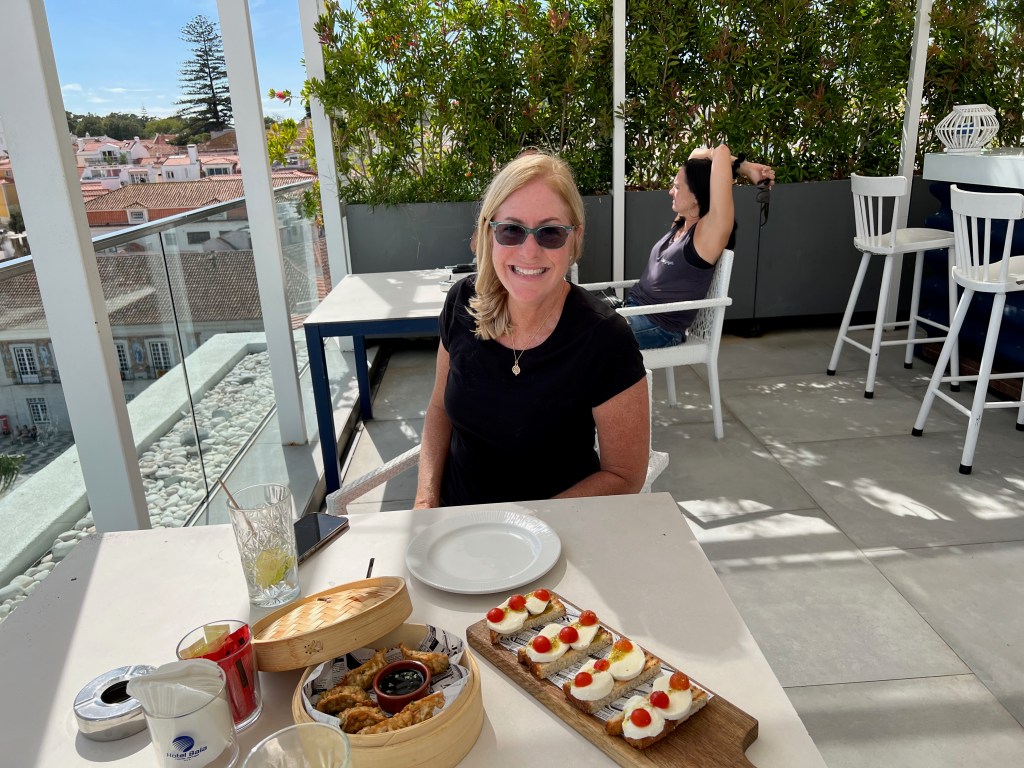
After a leisurely lunch, we checked to make sure we had our passports and headed off for our Novo Banco appointment with plenty of time to spare. We got there about 20 minutes early so we decided to keep walking for an additional 10 minutes and then double back. As luck would have it we stumbled across the local market right at the end of our 10 minute extension – so we didn’t get to go in.
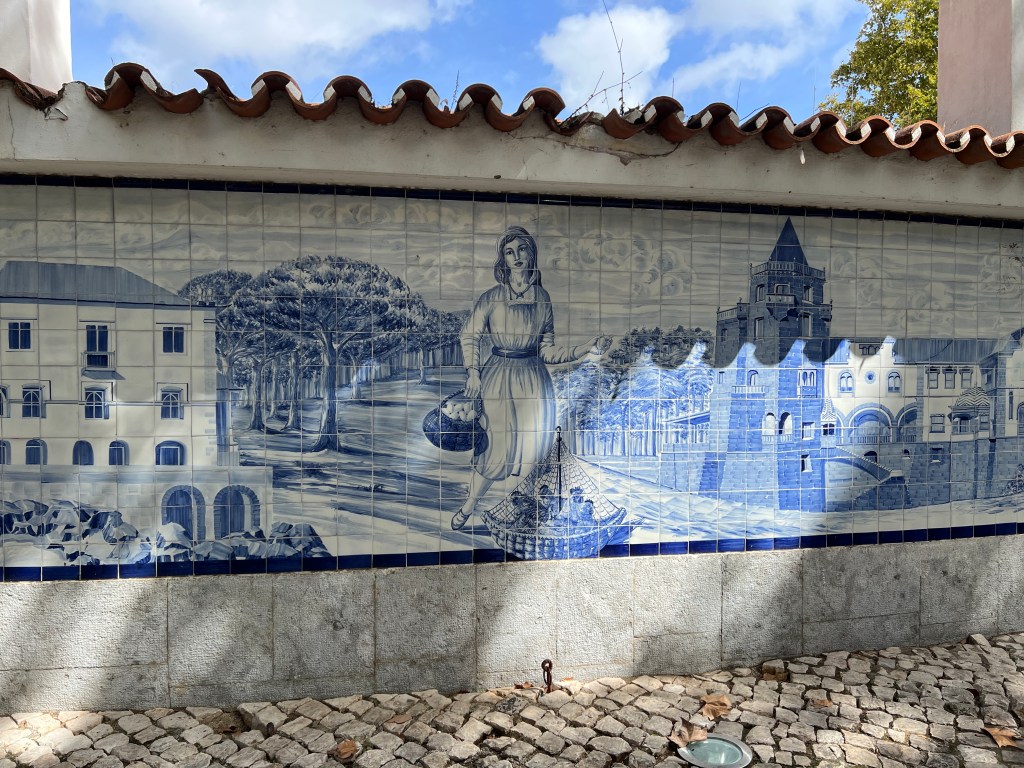
We doubled back and still arrived at Novo Banco a few minutes early for our appointment with Luis, Monica’s colleague who was pinch-hitting for her in Cascais. We checked in with the person manning the reception kiosk and took a seat in the corner. About that time a panicked man, clearly American, came rushing in and asked the person at the reception kiosk if there was someone he could talk to about an “urgent matter”. Best we could tell from overhearing the conversation, the panicked guy had showed up to a residency appointment sans some necessary bank documentation and had to provide that documentation before the end of the business day. It was pretty clear that the reception person did not share the panicked man’s urgency and she calmly directed him to a chair to sit and wait. At that point it was 2:00 and the bank was slated to close at 3:00. About that time Luis came out and got us and took us back to the conference room to execute our account documents.
Luis, who was delightful, asked for our passports to make copies and started doing his final validation of the documents he’d printed for us to sign. About that time, the lady from the reception kiosk came in and whispered something to Luis. The next thing that happened was the single funniest thing I’ve seen in Portugal…
Luis went from a smiling expression to a pained one and, I’m not making this up, proceeded to lean forward and ritualistically bang his forehead on the table three times in frustration. Luis then regained his composure and told us with a polite smile that he had to step out for a moment. We have no idea what was said to Luis, but we are pretty sure it involved the panicked man in the lobby. Luis was gone for about 10 minutes and then he returned along with his smile and we recommenced the process.
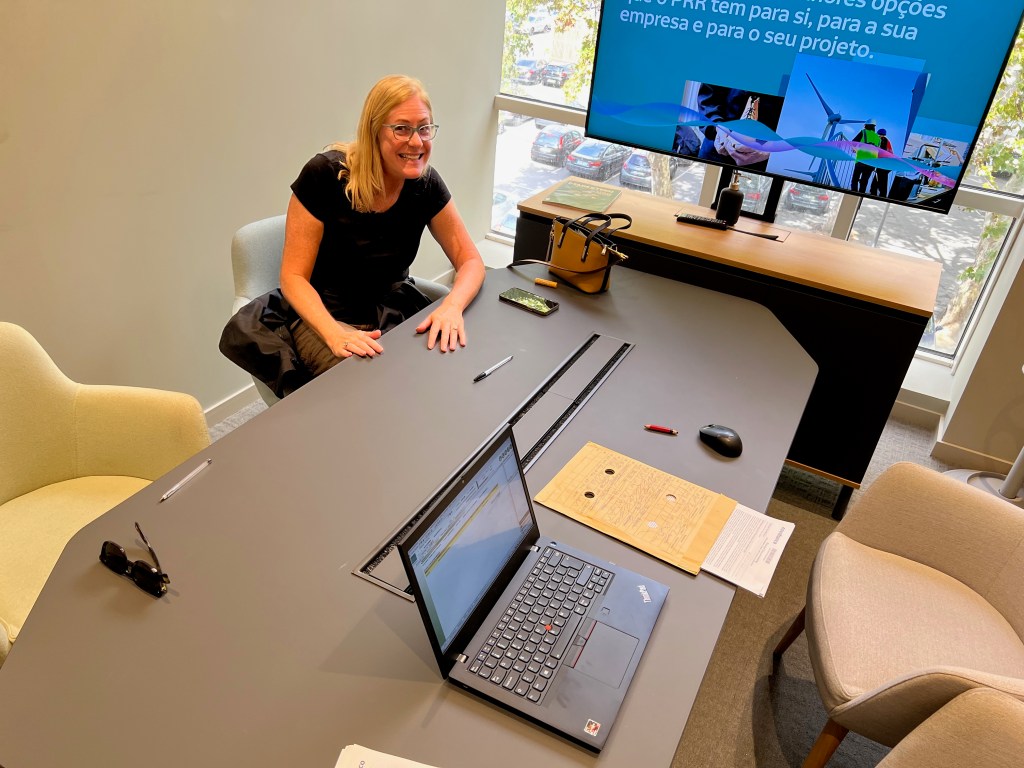
I can report that there are no fewer than 14 forms that we had to sign to get our Novo Banco accounts opened. That’s a lot of signing so there was some time for chit-chat with Luis during the process. Luis asked us if we knew the protocol for ATMs. I thought that was an odd question so I asked what he meant. Luis started by saying there are two things you need to know:
- You cannot withdraw more than €300 per day. Luis reported that was mostly a matter of all banks being required to all large bills to the Portuguese banking authority in Lisbon every Friday and so the banks tended to limit cash withdrawals to just avoid dealing with large bills.
- If you’re ever behind an older person at an ATM you should just leave and come back later. Apparently ATMs are capable of bill payment in Portugal and lots of older Portuguese people don’t have computers at home. And they find ATMs less intimidating than the Novo Banco smartphone app. So they will routinely post up at the only ATM in the area for 30-45 minutes paying all of their bills.
We finally finished the signing ceremony and Luis went out and fetched our very first balance inquiry from the printer showing our €1,000 safely on deposit in our Novo Banco account with both our names on the statement (a requirement for the visa process). We shook hands and he walked us out. About that same time the reception person was handing the panicked man a piece of paper and he was now smiling, too. So, in both cases, all’s well that ends well. And we got a fantastic story out of it.
We wandered back to our hotel, all smiles with our shiny new bank account, to have a celebratory glass of vinho verde.
We’d chosen an Italian restaurant that we’d passed on our afternoon walkabout for dinner that night.
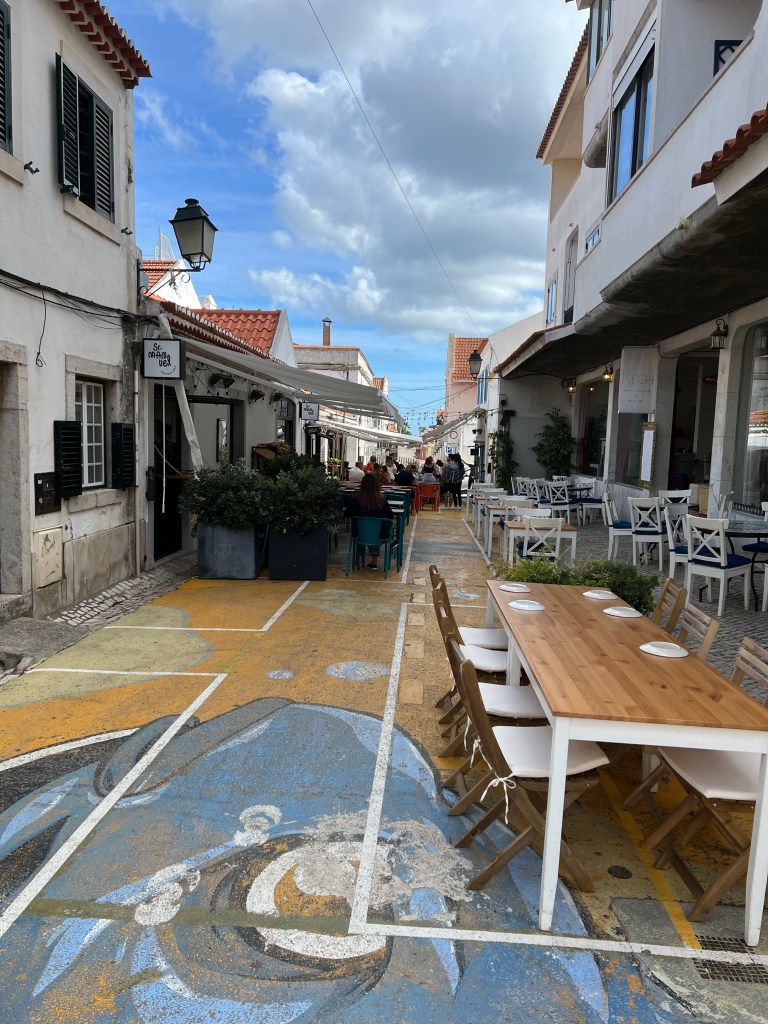
We had just been seated when a man walked in with a Golden Retriever to pick up his takeout order. We, being Golden Retriever People, asked if we could pet the dog and we struck up a conversation with the dog’s owner while they were fetching his order. Turns out he was an American expat from NYC who’d lived in Cascais with his wife and dog for several years and loved it and had been totally embraced by the community. He also was working on finishing his A2 levels in Portuguese to take the required test in Portuguese to get on the path to become a Portuguese citizen. His only complaint was that they’d not been able to find a place with a yard and had bought a beautiful 5th floor apartment in a building that had undergone a total renovation – which made taking the dog out a bit of a chore. So… American expat with Golden Retriever being treated like a local at the restaurant, successfully learning Portuguese, and nothing but good things to say about Cascais. That felt very much like an omen. After the day we’d had in Cascais, we’d decided that Cascais may have just knocked Carvoeiro off the top of the podium. And it didn’t hurt that Cascais is only 30 minutes from the Lisbon airport.
We trundled back to the hotel feeling pretty fulfilled for having opened a bank account and having a great conversation with the expat at the restaurant about living in Cascais.

